
The days before a hygiene audit bring a particular kind of pressure on a food production site. Surfaces must be clean, machinery must be free of stubborn residue, and every area has to stand up to scrutiny. Dry ice blasting is attracting attention because it removes baked on and greasy deposits without water or chemicals, and it can do so with the equipment still in place. It does not guarantee an audit result, and it does not replace a site’s sanitation steps. This article explains where it helps, where it does not, and what makes the difference on the day.
What Auditors Look For on a Food Site
Hygiene audits are thorough. They are guided by the principles of Hazard Analysis and Critical Control Point (HACCP) set out by the Food Standards Agency, and by the standards of the retailer or certification body behind the audit. Sentrex’s guide to BRC audits covers that side in more detail. Auditors look for visible residue on equipment, build up in hard to reach areas, and evidence that cleaning is planned, carried out and recorded.
Traditional cleaning can struggle with the complexity of a food factory. Surfaces hold oils, baked on deposits and fine residues that a quick clean leaves behind. Any lapse can lead to non compliance, a production hold or damage to the brand. This is why audit preparation needs a method that reaches the awkward places and a process that proves the work was done.
Where Dry Ice Blasting Helps Before an Audit
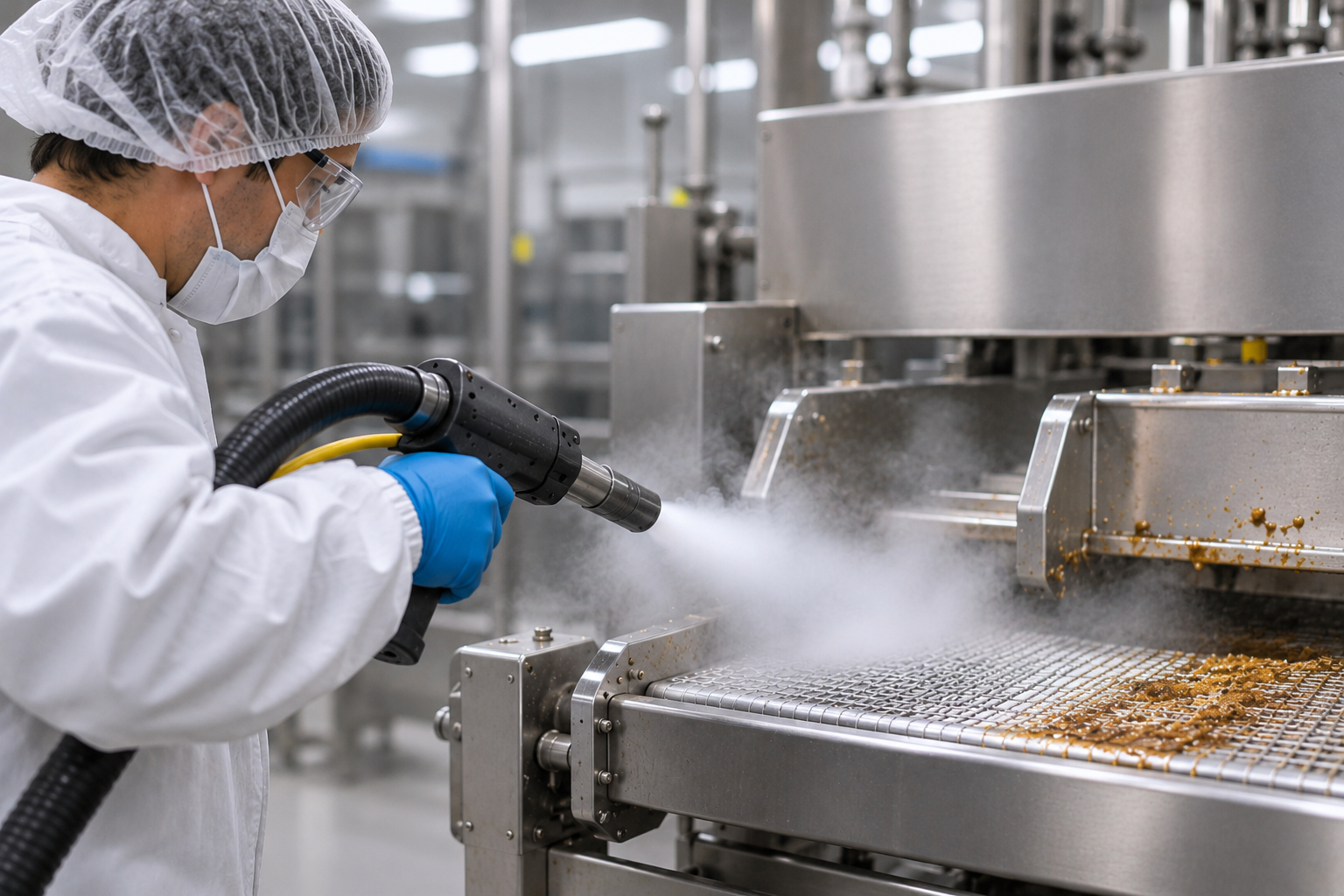
Dry ice blasting uses solid carbon dioxide pellets propelled at high speed. On contact, the pellets sublimate, which means they turn from a solid directly into a gas, so no blasting media is left behind to clear up. The impact and thermal shock lift oils, gels and baked on deposits from conveyors, ovens, mixers and other equipment. This means that stubborn residue can be removed without soaking the equipment.
Unlike jet washing, which introduces water and can leave wet spots, slip hazards and damp corners where bacteria thrive, dry ice blasting adds no moisture. That fits well within bakery and food processing facility cleaning, where hygiene standards are strict and drying time is costly. It also sits naturally within wider food production cleaning programmes.
What Dry Ice Blasting Does Not Replace
Dry ice blasting removes soil and residue. It is not a disinfection step. Sanitation stages that a site’s HACCP plan requires, and any verification of allergen or hygiene cleaning, still apply after the residue has been removed. Think of dry ice as the step that makes those later steps more effective, because they act on a surface that is already clear of build up. Being clear about this keeps expectations accurate and keeps the audit file honest.
Keeping Production Moving During Audit Preparation
Downtime is a frequent concern at food sites. Mechanical cleaning methods often require equipment to be dismantled and then left to dry. Dry ice blasting can clean many machines in place, so lines return to operation sooner and audit preparation does not eat into output. Sentrex covers the mechanics in Can Dry Ice Blasting Clean Machinery Without Dismantling It? and the time savings in How Does Dry Ice Blasting Reduce Production Downtime?.
This matters at busy food manufacturing centres, where any pause can disrupt a supply chain. It allows production and cleaning teams to plan around one another instead of competing for the same time.
Skilled, Accountable Delivery
Technology does not pass audits on its own. The people behind the process matter. Sentrex places significant emphasis on staff training, supported by training assessments, so operatives understand food safety requirements and the risks specific to each site. Supervisors provide accountability on site and keep standards consistent.
This gives clients visibility over what was cleaned, by whom and when. Sentrex is a ProcurePublic Framework Partner and holds EcoVadis Silver accreditation, placing it in the top 15% of assessed businesses globally for sustainability performance. Both are listed on its accreditations page.
Cleaning Sensitive Equipment Without Risk
Food production relies on delicate machinery with electrical components. Dry ice is a soft medium and does not conduct electricity, so equipment can be cleaned without the abrasion or moisture that could damage it, provided it has been isolated first. In humid food environments, condensation also has to be controlled before equipment is re energised. Sentrex explains the safety side in Is Dry Ice Blasting Safe to Use Around Electrical Equipment?.
Building an Audit Trail
Hygiene audits depend on documentation and traceability. Using dry ice blasting within professional cleaning services allows records to link each clean to trained personnel and to specific areas of the site. Supervisors inspect the work, and the records give a clear audit trail for compliance purposes. This reduces the risk of audit findings that come from unclear cleaning histories or inconsistent standards between shifts.
Fitting Dry Ice Into a Wider Cleaning Programme
Dry ice blasting works best as part of a systematic programme rather than a one off effort before an audit. Combining it with broader industrial cleaning, including machinery cleaning and, where appropriate, jet washing for external areas, covers every surface an auditor may inspect. Sentrex agrees with each site where dry ice fits within the existing schedule, and its specialist cleaning teams coordinate with onsite staff to reduce cross contamination risk and avoid disruption. Planned professional cleaning services of this kind mean fewer surprises when the auditor arrives.
Where Sentrex Delivers Dry Ice Blasting
Sentrex provides dry ice blasting through local teams in the Midlands and Northern England. That includes dry ice blasting in Birmingham, dry ice blasting in Leeds and dry ice blasting in Manchester. It also covers Bolton, Bury, Rochdale, Stockport and Warrington. For manufacturers with several plants, manufacturing group cleaning across multiple sites applies the same standards everywhere, so audit readiness does not depend on which site is being inspected.
Is Dry Ice Blasting Worth Adding to Your Audit Preparation?

No cleaning method guarantees a perfect audit. Dry ice blasting does offer practical advantages for food sites: a dry, chemical free process, less secondary waste and less downtime while the site prepares. Combined with trained operatives and clear documentation, it helps build the kind of record inspectors look for. If you want to see how it applies to your equipment, read Is Dry Ice Blasting Suitable for Food Production Lines? and then contact us for a site assessment aligned to your compliance goals.


