Manchester’s healthcare sector spans NHS acute trusts, GP surgeries, dental practices, private clinics, mental health facilities, and specialist medical centres requiring cleaning standards supporting patient safety, infection control, and regulatory compliance. Manchester University NHS Foundation Trust operates across multiple sites including Manchester Royal Infirmary, Saint Mary’s Hospital, and Royal Manchester Children’s Hospital. Salford Royal manages acute healthcare across extensive clinical environments. Pennine Acute Hospitals Trust serves communities across North Manchester, Oldham, Rochdale, and Bury.
Private healthcare facilities throughout Didsbury, Cheadle, and city centre serve growing patient populations. GP surgeries, dental practices, and community health centres operate throughout Greater Manchester serving primary care populations. Sentrex delivers medical cleaning addressing infection control requirements across Manchester’s diverse healthcare landscape.


Manchester University NHS Foundation Trust operates across multiple city centre sites. Manchester Royal Infirmary manages acute clinical environments including emergency departments, surgical theatres, intensive care units, and general wards. Saint Mary’s Hospital manages specialist maternity and gynaecology services. Royal Manchester Children’s Hospital serves paediatric populations requiring specific infection control protocols. Each clinical environment demands cleaning standards supporting patient safety throughout continuous operations.
Salford Royal manages acute healthcare across extensive clinical environments. Neurology, cardiology, and specialist surgical services operate within complex clinical buildings. Research facilities alongside clinical operations create varied cleaning requirements. Academic health science centre environments combine patient care with research activities demanding cleaning protocols supporting both functions simultaneously.
North Manchester General Hospital and Fairfield General Hospital serve community acute care populations. District general hospital environments manage emergency, elective, and community healthcare across varied clinical settings. Cleaning coordinates around continuous patient care delivery avoiding disruption to clinical operations whilst maintaining rigorous infection control standards.
Private healthcare facilities throughout Didsbury, Cheadle, and city centre serve growing patient populations expecting premium clinical environments. Spire Manchester Hospital and BMI The Alexandra manage private acute care. Independent clinics throughout Altrincham, Sale, and Wilmslow serve specialist outpatient populations. Private healthcare environments combine clinical hygiene requirements with premium presentation standards supporting patient experience.
GP surgeries, dental practices, and community health centres operate throughout Greater Manchester serving primary care populations. High patient throughput creates intensive cleaning demands across waiting areas, consultation rooms, and clinical spaces. Primary care environments balance clinical hygiene with welcoming atmospheres supporting patient wellbeing during visits.
Healthcare cleaning operates under regulatory frameworks general commercial cleaning doesn’t encounter. CQC standards for medical cleaning govern cleaning procedures, documentation requirements, and staff training across registered healthcare providers. Inspection failures create regulatory consequences affecting provider registration and operational continuity.
Manchester’s NHS estate presents specific challenges. Victorian hospital buildings throughout city centre combine heritage architecture with contemporary clinical requirements. Modern clinical build programmes introduce contemporary infection control specifications. Mixed estate requires cleaning knowledge addressing both period building characteristics and contemporary clinical standards simultaneously.
Infection control obligations extend beyond visible cleanliness. Healthcare-associated infections including MRSA, C. difficile, and norovirus create clinical risks requiring systematic cleaning protocols preventing transmission. Manchester’s acute hospitals manage complex infection control environments where cleaning forms a critical component of patient safety systems.
Manchester’s diverse patient populations create specific cleaning considerations. Immunocompromised patients in oncology and transplant units require enhanced infection control standards beyond standard ward cleaning. Paediatric environments need cleaning products appropriate for children. Mental health facilities balance clinical hygiene with therapeutic environment considerations. Each clinical context receives appropriate protocols rather than generic healthcare cleaning approaches.
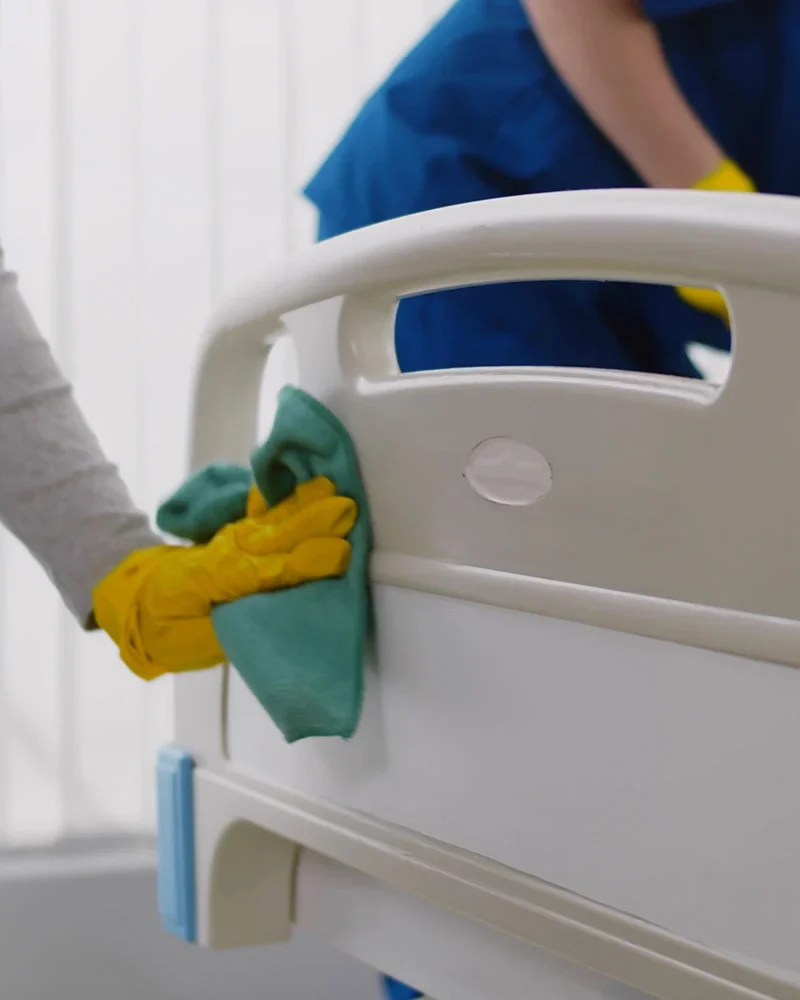

Daily cleaning services address routine cleaning maintaining clinical environments throughout operational periods. Ward areas receive systematic daily cleaning including patient bed spaces, bathrooms, and shared facilities. Reception and waiting areas maintain presentation supporting patient confidence. Clinical rooms clean between patient consultations preventing cross-contamination. Daily cleaning forms the foundation of infection control within Manchester healthcare facilities.
Decontamination cleaning addresses enhanced cleaning following infectious disease incidents. Norovirus outbreaks, C. difficile identification, and MRSA incidents require specialist decontamination beyond routine cleaning. Outbreak management cleaning prevents transmission whilst minimising ward closure periods affecting patient care delivery. Manchester’s acute hospitals manage decontamination scenarios requiring rapid specialist response capabilities.
Periodical cleaning services address deep cleaning during ward closures, patient discharges, and scheduled maintenance windows. Terminal cleaning between patient occupancy removes accumulated contamination from all surfaces including high-level areas, equipment, and fixtures. Periodic deep cleaning maintains standards routine daily cleaning cannot achieve alone. Scheduled periodical cleaning integrates with ward management planning optimising cleaning windows.
Clinical waste management addresses segregation, containment, and disposal of healthcare waste streams. Sharps disposal, infectious waste containment, and pharmaceutical waste management require certified procedures satisfying regulatory requirements. Manchester healthcare facilities generate substantial clinical waste volumes requiring systematic management preventing cross-contamination and regulatory non-compliance.

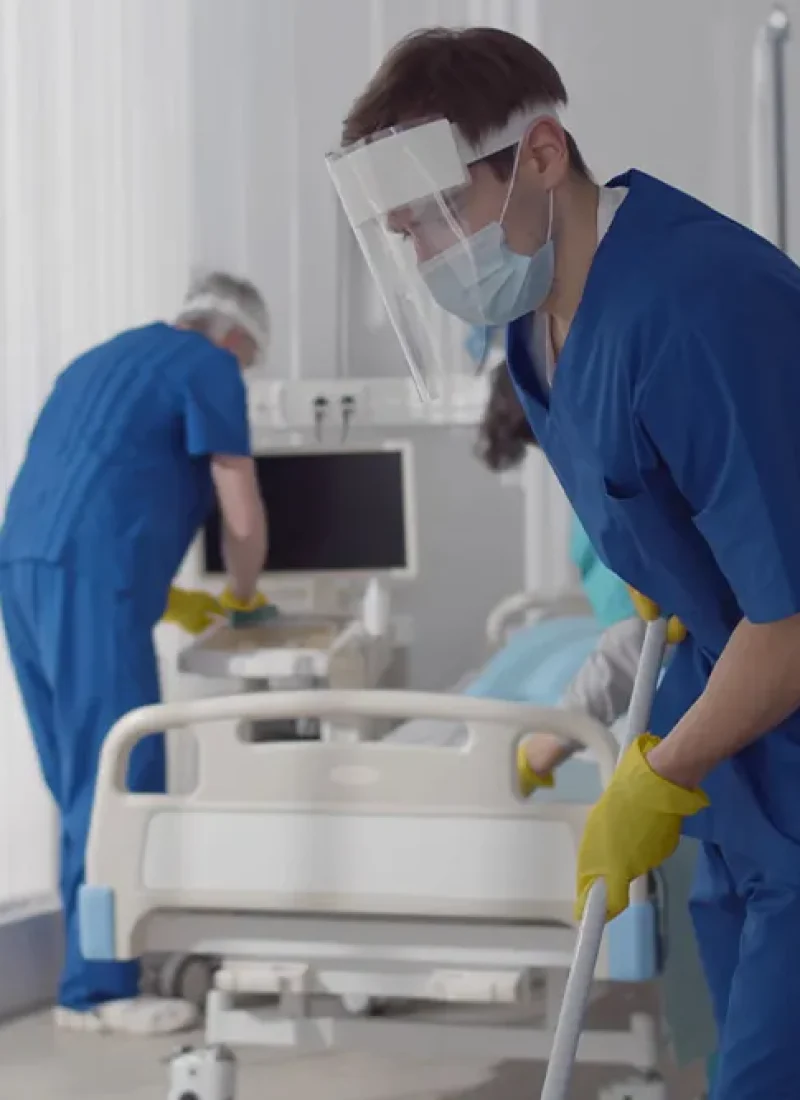
Healthcare cleaning compliance encompasses CQC registration requirements, NHS National Standards of Cleanliness, and infection prevention and control frameworks. Manchester NHS Trusts satisfy NHS England cleanliness standards through systematic audit programmes. Private healthcare providers satisfy CQC registration requirements through documented cleaning protocols and staff training evidence.
NHS National Standards of Cleanliness define cleanliness thresholds across functional areas. High-risk clinical areas including theatres and intensive care require highest cleanliness standards. General ward areas satisfy specified standards through systematic cleaning programmes. Support areas including corridors and waiting rooms meet defined thresholds. Audit programmes verify compliance through regular inspection and scoring.
Infection prevention and control teams within Manchester healthcare organisations specify cleaning requirements, approve cleaning products, and audit compliance. Cleaning service providers work within IPC frameworks rather than applying generic approaches. Product selection satisfies IPC team specifications. Procedures follow IPC guidance. Documentation satisfies audit requirements. Working within clinical governance frameworks requires healthcare cleaning expertise beyond general commercial cleaning knowledge.

GP surgeries require regular deep cleaning addressing contamination accumulating in high-contact clinical environments. Manchester’s GP surgeries serve high patient volumes across consultation rooms, treatment areas, and waiting facilities. High-contact surfaces including door handles, reception counters, and waiting room seating require frequent cleaning preventing pathogen transmission between patients.
Primary care environments balance clinical hygiene with welcoming atmospheres. Patients attending GP surgeries often present with infectious conditions creating transmission risks. Waiting rooms concentrate infectious patients in shared spaces. Cleaning protocols address this risk through systematic surface cleaning and appropriate product selection preventing cross-infection.
CQC inspection of GP practices evaluates cleanliness standards alongside clinical governance. Inspection failures create regulatory consequences affecting practice registration. Manchester’s GP practices maintain cleaning documentation demonstrating systematic management satisfying CQC evidence requirements. Staff training records evidence appropriate cleaning competence. Audit programmes verify standards continuously rather than preparing reactively for inspections.
Medical cleaning coordinates with clinical operations throughout continuous healthcare delivery. Ward cleaning occurs around patient care activities avoiding disruption whilst maintaining standards. Theatre cleaning between surgical lists requires efficient turnaround within compressed timeframes. Emergency department cleaning manages continuous patient flow without operational interruption. Clinical schedules dictate cleaning windows rather than cleaning programmes dictating clinical operations.
Rapid response capabilities address unexpected contamination incidents. Spillage response prevents infection risks and slip hazards within clinical environments. Decontamination response addresses infectious disease incidents requiring immediate specialist cleaning. Flood response manages water ingress affecting clinical environments. Manchester healthcare facilities require cleaning partners demonstrating reliable rapid response rather than scheduled-only service provision.
Out-of-hours cleaning addresses deep cleaning during lower-activity periods. Ward closures provide opportunities for terminal cleaning. Overnight periods enable thorough cleaning of shared facilities and high-contact surfaces. Weekend reduced activity creates windows for periodical cleaning addressing areas requiring extended dwell times or specialist approaches.
Our accreditations including CHAS, Safe Contractor, ISO 9001, and ISO 14001 demonstrate systematic approaches satisfying healthcare procurement requirements. Staff complete healthcare-specific training addressing infection control procedures, clinical waste management, and CQC compliance requirements. DBS-checked operatives satisfy security requirements for clinical environment access. Insurance coverage addresses healthcare environment-specific risks.
Our approach emphasises understanding Manchester healthcare operations across diverse clinical settings. NHS acute trust environments operate under different frameworks than private healthcare facilities. GP surgeries have different requirements than specialist clinical centres. Mental health facilities need approaches other clinical environments don’t demand. Each facility receives cleaning programmes matching specific clinical requirements, compliance frameworks, and operational patterns.
Manchester healthcare providers operating NHS acute hospitals, private healthcare facilities, GP surgeries, dental practices, mental health facilities, or community health centres can contact us on 0333 240 1145 to discuss medical cleaning addressing infection control requirements, CQC compliance obligations, and operational demands across Manchester’s diverse healthcare landscape.
