Manchester’s commercial and industrial roofing spans flat membrane systems, profiled metal cladding, and traditional pitched roofs accumulating contamination affecting building performance and appearance. Distribution warehouses throughout Trafford Park and Manchester Airport City operate beneath extensive flat roofing vulnerable to ponding and biological growth. Industrial facilities across Openshaw, Miles Platting, and Ardwick manage metal cladding accumulating atmospheric deposits.
Retail developments including Trafford Centre and Manchester Arndale feature glazed roof sections requiring regular cleaning maintaining natural light quality. Office buildings throughout Spinningfields, NOMA, and MediaCityUK combine modern roofing systems with building services equipment creating maintenance access challenges. Heritage buildings across city centre manage traditional pitched roofs and valley gutters requiring preservation-appropriate cleaning. Sentrex delivers roof cleaning addressing diverse roofing types across Manchester’s built environment.


Manchester’s urban environment and climate create specific contamination patterns. Atmospheric pollution from traffic volumes settles on horizontal surfaces. Industrial emissions deposit particulates across roofing. Biological growth thrives in damp conditions Manchester’s rainfall patterns create. Moss, algae, and lichen colonise roof surfaces retaining moisture and accelerating material deterioration.
Flat roofing systems accumulate standing water in areas lacking adequate drainage. Sediment builds in ponding zones. Organic matter collects creating growth media for vegetation. Blocked drainage outlets prevent water clearance exacerbating problems. Membrane degradation accelerates where moisture remains rather than draining effectively.
Metal cladding accumulates atmospheric deposits dulling appearance. Industrial fallout creates staining difficult removing without appropriate cleaning methods. Fastener zones and profile valleys collect contamination concentrations. Appearance deterioration affects building presentation whilst neglected contamination can initiate corrosion affecting structural performance.
Glazed roof sections require regular cleaning maintaining light transmission. Dirt accumulation reduces natural light quality affecting interior environments. Retail developments value natural lighting supporting customer experience. Office buildings depend on daylight reducing artificial lighting energy consumption. Schools and leisure facilities benefit from natural light supporting occupant wellbeing.
Biological growth on traditional pitched roofs accelerates material deterioration. Moss retains moisture against roof coverings. Root systems penetrate tile overlaps and slate fixings. Water ingress follows creating interior damage. Heritage buildings suffer accelerated degradation when biological growth remains unaddressed over extended periods.
Roof access creates significant safety challenges. Working at height demands appropriate equipment, training, and supervision. Fall protection systems need installing before work commences. Edge protection prevents accidents. Harness systems provide personal protection. Safety equipment costs and installation time add substantially to basic cleaning expenditure.
Flat roofs present specific challenges. Membrane systems don’t support concentrated loads. Walkways protect surfaces from foot traffic damage. Equipment positioning avoids membrane strain. Standing water areas create slip hazards. Drainage outlet cleaning requires careful access preventing additional blockages or membrane damage during maintenance activities.
Metal cladding profiles create uneven working surfaces. Valley sections accumulate contamination whilst also creating foot placement challenges. Fragile roof light panels intersperse solid cladding. Identifying and protecting fragile elements prevents dangerous incidents. Profile geometry affects cleaning equipment access and operator safety during works.
Pitched roofs demand specialist access techniques. Traditional ladders prove inadequate for extensive cleaning. Scaffold towers provide stable platforms but installation consumes time and budget. Mobile elevated working platforms suit some applications but building proximity and ground conditions affect feasibility. Rope access offers flexibility but demands specialist operatives commanding premium rates.
Heritage buildings combine access challenges with preservation requirements. Traditional roof coverings including slate and clay tiles require careful foot placement preventing breakage. Valley gutters and parapet gutters need cleaning without damaging historic fabric. Conservation requirements specify appropriate cleaning methods avoiding damage whilst achieving necessary maintenance outcomes.
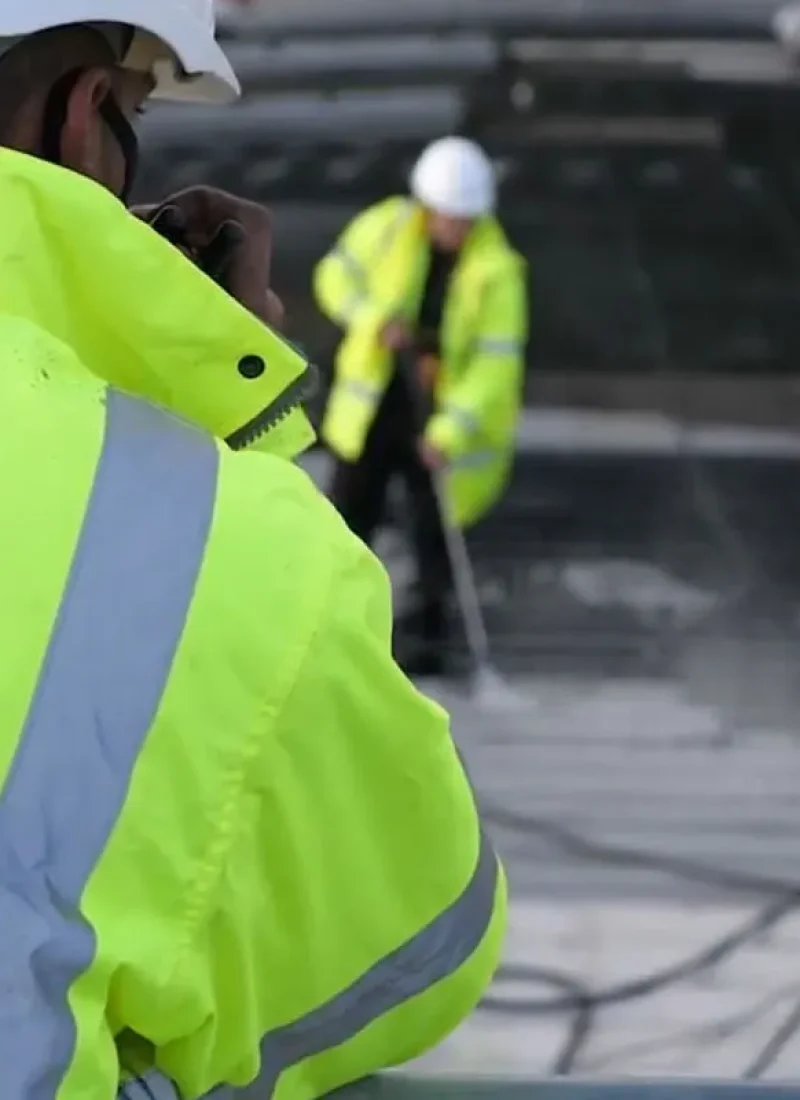
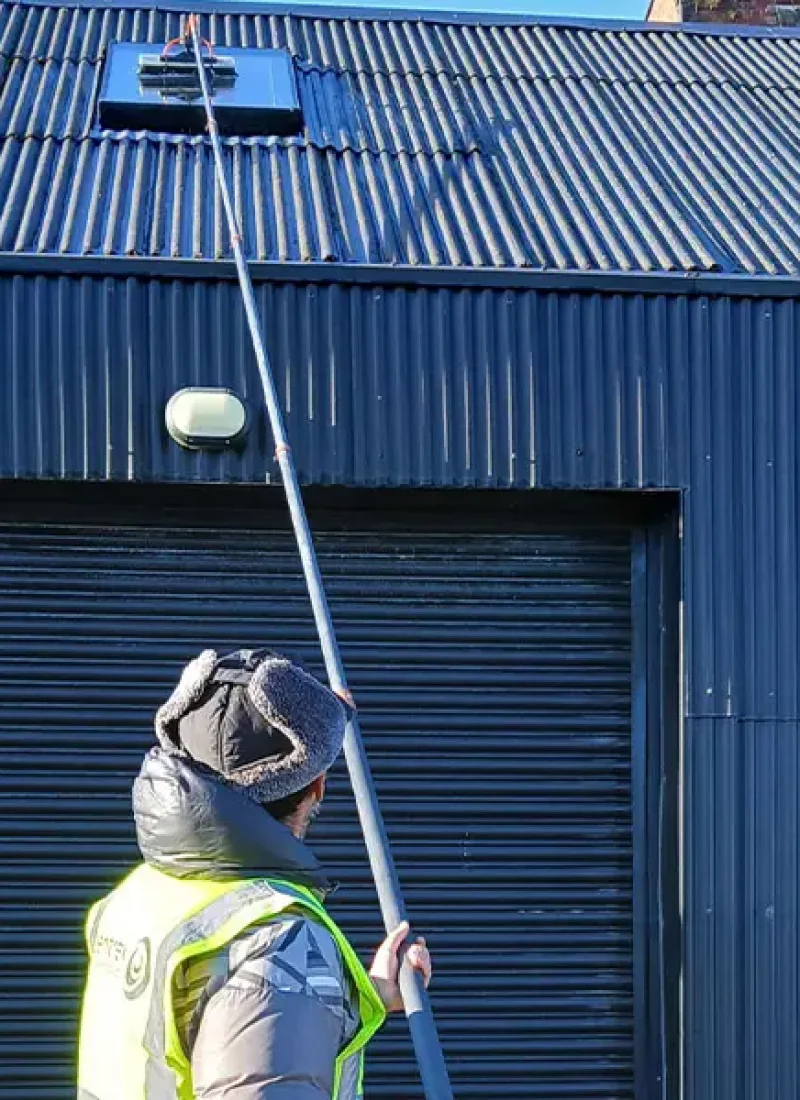
Soft washing addresses biological growth without high-pressure damage. Biocide treatment kills moss, algae, and lichen. Vegetation dies and loosens over time. Follow-up washing removes dead material. The approach suits heritage buildings where pressure washing risks damaging traditional coverings. Treatment frequency depends on exposure and growth rates varying across Manchester’s urban environment.
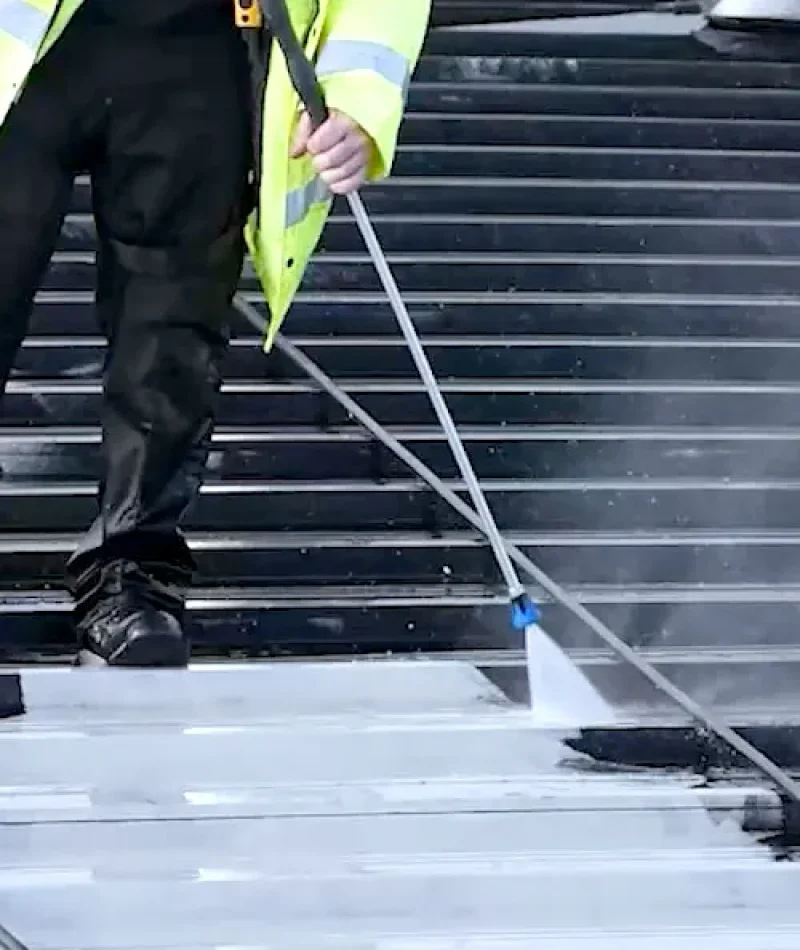
Pressure washing removes accumulated contamination from robust surfaces. Metal cladding tolerates controlled pressure washing removing atmospheric deposits. Concrete roof surfaces accept pressure cleaning addressing stubborn soiling. However, inappropriate pressure damages membranes, dislodges tiles, and forces water under coverings creating ingress problems. Operator skill matters significantly when pressure equipment meets varied roof surfaces.
Manual cleaning addresses areas unsuitable for mechanised approaches. Heritage valley gutters clean using hand tools preserving historic fabric. Fragile roof sections receive careful attention. Detail work around roof penetrations, flashing, and drainage outlets needs manual intervention. Labour-intensive processes prove costly but deliver results other methods cannot achieve on sensitive surfaces.
Drone technology transforms glazed roof cleaning. Aerial systems access large glazed areas without internal scaffolding or external platforms. Drone cleaning services address retail developments and office buildings efficiently. Manchester Arndale and similar facilities benefit from access solutions avoiding operational disruption traditional methods create.
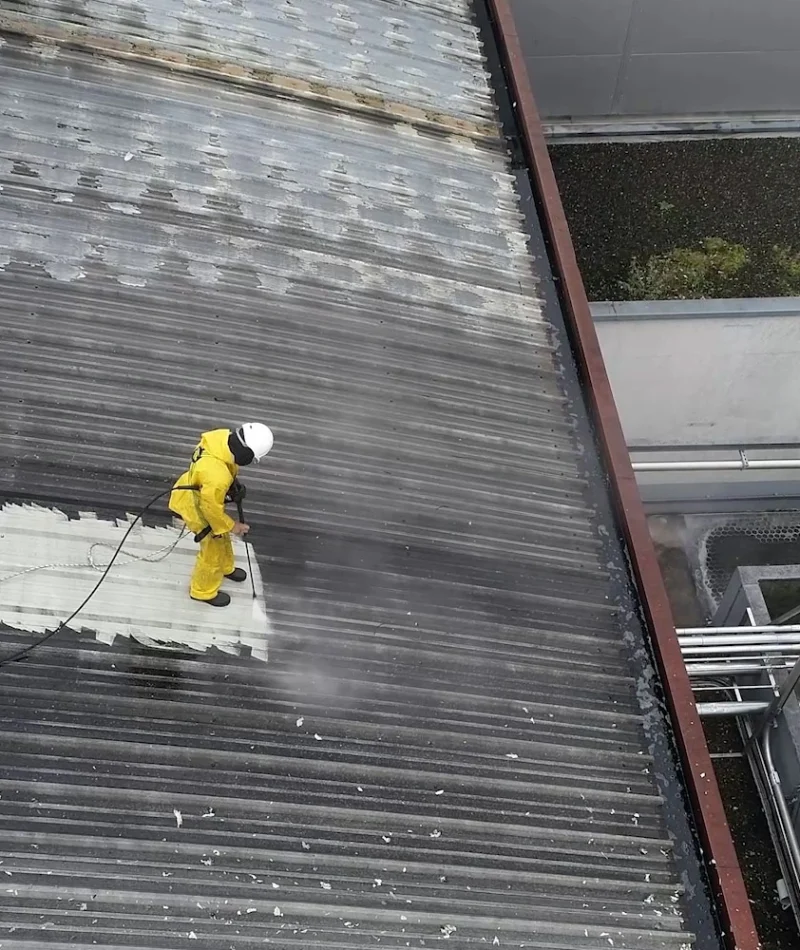
Trafford Park and Manchester Airport City distribution warehousing manages extensive flat roofing systems. Biological growth and ponding problems affect building performance. Regular cleaning maintains drainage effectiveness. Membrane condition monitoring during cleaning identifies developing problems before leaks occur. Warehouse operations continue below whilst roof maintenance proceeds above without internal disruption.
Industrial facilities across Openshaw, Miles Platting, and Ardwick manage metal cladding affected by atmospheric deposits. Appearance deterioration affects building presentation. Neglected contamination initiates corrosion affecting structural performance and asset values. Regular cleaning maintains appearance whilst protecting long-term building fabric condition.
Trafford Centre and Manchester Arndale glazed roof systems require regular cleaning maintaining natural light quality. Retail environments value daylight supporting customer experience and reducing artificial lighting costs. Large glazed areas demand efficient cleaning methods. Traditional access proves expensive and disruptive. Drone technology addresses extensive glazing without operational disruption.
Spinningfields, NOMA, and MediaCityUK office developments combine modern roofing with building services equipment. Plant equipment, ventilation systems, and renewable energy installations create maintenance access challenges. Cleaning coordinates with building services maintenance optimising access equipment deployment. Coordinated approaches reduce costs whilst maintaining comprehensive building care.
Heritage buildings throughout city centre manage traditional pitched roofs vulnerable to biological growth. Moss and algae accelerate deterioration affecting historic fabric. Regular maintenance preserves heritage assets. Preservation-appropriate cleaning methods protect whilst addressing necessary maintenance. Conservation requirements satisfy alongside practical building performance needs.

Roof cleaning delivers maximum value within comprehensive building maintenance. Manchester properties combine roof cleaning with high-level cleaning, cladding cleaning, and gutter cleaning addressing complete building envelope maintenance through coordinated service delivery.
Access equipment deployment optimises when multiple services coordinate. Scaffold installation for roof cleaning enables façade cleaning simultaneously. Mobile platforms address roofing, cladding, and windows during single mobilisation. Coordinated approaches reduce costs whilst ensuring comprehensive building care rather than piecemeal maintenance managing individual elements independently.
Integration with industrial cleaning and commercial cleaning creates comprehensive facility support. Single supplier relationships simplify management whilst ensuring consistent service quality across all building maintenance activities.
Our accreditations including CHAS, Safe Contractor, ISO 9001, and ISO 14001 demonstrate systematic approaches satisfying procurement requirements. Working at height competencies ensure safe operations. Operatives hold appropriate certifications addressing rope access, powered access platforms, and scaffold operations.
Risk assessments address site-specific hazards before work commences. Method statements detail safe procedures appropriate to roofing types and access methods. Insurance coverage protects all parties. Our approach emphasises understanding Manchester roofing across diverse building types and construction methods.
Warehouse flat roofs operate differently than retail glazed systems. Industrial metal cladding has different needs than heritage pitched roofs. Office developments demand coordination with building services maintenance. Each receives appropriate technical approaches and access methods matching specific requirements.
Manchester property managers operating warehouses, industrial facilities, retail developments, office buildings, or heritage properties can contact us on 0333 240 1145 to discuss roof cleaning addressing building-specific requirements, contamination types, and access challenges across Manchester’s diverse built environment.
