Logistics sites, with their expansive floor areas, continuous operational schedules, and high volume vehicle and pedestrian traffic, are increasingly turning to robotic and automated cleaning technology to maintain standards that traditional manual cleaning struggles to match at scale. Sentrex delivers robotic cleaning services addressing the specific demands of the UK’s logistics and distribution sector.


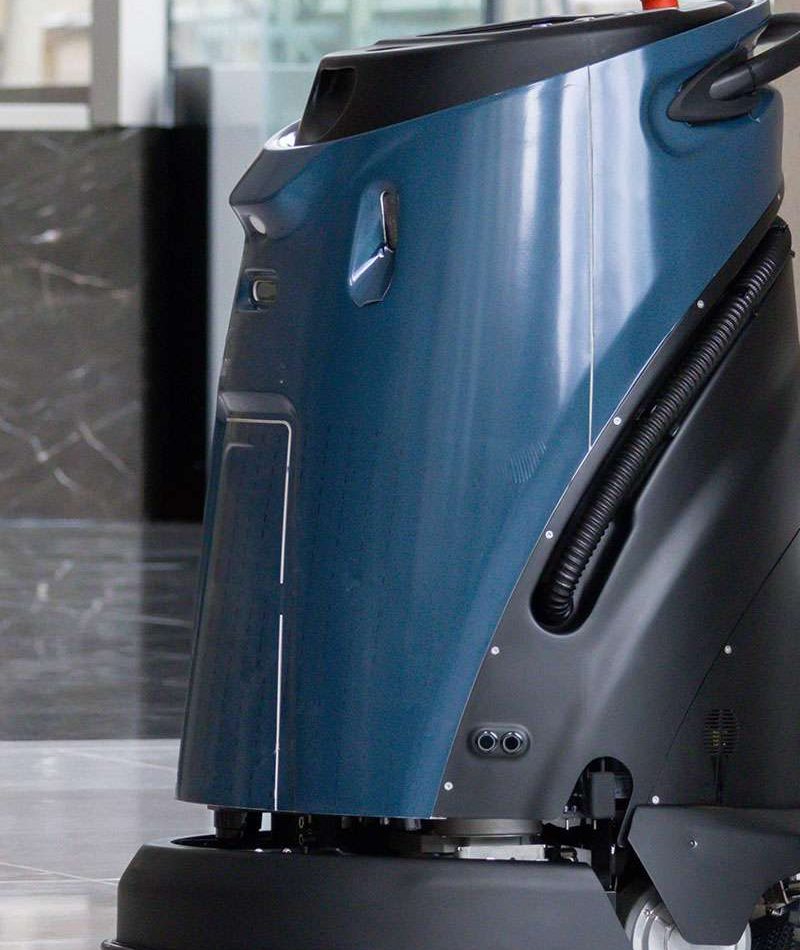
Autonomous floor scrubbers navigate warehouse and distribution centre floors using built in mapping and sensor technology, covering large floor areas systematically without the fatigue or inconsistency that affects manual cleaning across a shift. These machines work continuously across defined routes, adapting to obstacles including racking, pallets, and pedestrian traffic as they move through the facility.
Robotic technology suits the scale that logistics sites operate at, where floor areas can extend across tens of thousands of square metres and manual cleaning alone struggles to maintain consistent coverage across a full shift pattern. Automated equipment complements rather than replaces the trained operatives who manage, monitor, and maintain the technology throughout its operation.
Large, open floor plans typical of warehouse and distribution facilities suit robotic cleaning far better than the varied, compartmentalised spaces found in office or retail environments. Our wider industrial cleaning capability, including warehouse cleaning, already addresses these environments directly, and robotic technology extends this capability across the continuous, round the clock operation many logistics sites run.
Continuous operational schedules mean logistics sites rarely have an extended quiet period suited to lengthy manual cleaning shifts. Robotic equipment can operate during lower activity windows within an otherwise continuous schedule, delivering consistent floor cleaning without requiring the site to pause operations specifically to accommodate it.
Our analysis of robotic floor machines sets out how this technology navigates and cleans large industrial floor areas, covering the mapping, sensor, and safety systems that allow autonomous machines to operate safely alongside forklifts, pedestrians, and racking systems typical of a working warehouse.
Deployment requires careful planning around a site’s specific layout, traffic patterns, and operational schedule, ensuring the technology delivers genuine value rather than simply replicating what manual cleaning already achieves.

Warehouse and distribution buildings often present extensive roof, cladding, and high level areas that present access challenges standard cleaning methods struggle to address efficiently. Our analysis of how drone cleaning saves time, money, and risk sets out how this technology addresses these elevated areas without the access equipment and time typically required for high level cleaning across large industrial roofscapes.
Drone technology suits the scale of logistics buildings particularly well, covering extensive roof and cladding areas more efficiently than traditional access methods while reducing the working at height exposure associated with manual high level cleaning.
Consistency represents one of the clearest benefits automated cleaning delivers. Robotic equipment covers the same route to the same standard on every pass, removing the variability that affects manual cleaning across different shifts and operatives. This consistency matters directly to logistics operators managing large facilities where uneven cleaning standards are difficult to spot until they become a visible problem.
Safety benefits follow closely behind. Reducing manual cleaning exposure in areas with heavy vehicle movement, and reducing working at height exposure through drone technology, lowers risk across some of the more hazardous cleaning tasks a logistics site generates. Automated technology also supports continuous operation, working around a site’s schedule rather than requiring dedicated downtime that reduces overall productivity.

Our accreditations including CHAS, Safe Contractor, ISO 9001, and ISO 14001 demonstrate systematic approaches satisfying the procurement requirements logistics operators expect. Our approach emphasises technology supported by trained people, with operatives managing, monitoring, and maintaining robotic and drone equipment rather than technology operating without oversight.
Logistics and distribution facility managers can contact us on 0333 240 1145 to discuss robotic and automated cleaning addressing floor standards, high level access, and the operational efficiency logistics sites depend on.
