Leeds concentrates commercial architecture demanding access solutions traditional methods cannot provide. Trinity Leeds spans 27 acres beneath glazed roofs accumulating environmental deposits. First Direct Arena hosts 13,500 capacity beneath expansive canopies. Bridgewater Place rises 110 metres above Wellington Street. Victoria Gate’s curved glass façades extend across city centre blocks. The Merrion Centre, Broadcasting Tower, and countless commercial developments throughout LS1, LS2, and LS3 postcodes create cleaning requirements where scaffolding costs exceed budgets and access platforms cannot physically reach. Sentrex delivers drone cleaning services eliminating access complications whilst maintaining standards.


Leeds city centre combines Victorian grandeur with contemporary development. Corn Exchange’s glass dome sits beneath years of urban deposits. County Arcade’s terracotta façades and ornate glazing require preservation appropriate maintenance. Queen’s Arcade connects retail spaces beneath intricate architectural features accumulating grime invisible from ground level but apparent to upper floor occupants.
Modern developments create different challenges. The Light development’s entertainment complex operates beneath extensive roof glazing. Clarence Dock residential and commercial spaces feature floor to ceiling windows across waterfront buildings. Leeds Dock (formerly Royal Armouries) combines heritage structures with new build offices where cleaning access wasn’t considered during architectural planning.
Financial and professional services concentrate around Park Row, Wellington Street, and East Parade. Law firms, accountancy practices, and corporate headquarters occupy buildings where appearance directly affects client perceptions. Ground level presentation matters, but upper floor window cleanliness and façade condition contribute equally to professional image. These businesses cannot accept months of scaffolding disrupting operations.
Retail throughout Briggate, Headrow, and Commercial Street operates within buildings where upper floors remain occupied whilst ground floor trading continues. Traditional cleaning requiring building closure or extensive safety zones becomes commercially impossible. Access solutions must work around rather than interrupt business operations.
Hospitals including Leeds General Infirmary and St James’s University Hospital manage buildings where infection control prohibits traditional access equipment tracking contaminants through clinical areas. External cleaning must occur without internal access or operational disruption to patient care.
University of Leeds campus buildings serve 38,000 students across Woodhouse and city centre locations. Academic calendars eliminate traditional summer shutdown periods for maintenance. Term time operations prevent scaffolding blocking pedestrian routes or obscuring teaching spaces. Cleaning schedules must compress into brief gaps between academic activities.
Consider Bridgewater Place realities. Traditional rope access cleaning requires specialist labour charging premium rates. Multiple operatives work simultaneously to justify mobilisation costs. Weather sensitivity extends project timescales. Building management coordinates tenant notification, insurance documentation, and safety zone establishment. The cleaning becomes a major project rather than routine maintenance.
Trinity Leeds’ roof glazing spans retail operations generating significant revenue per square foot. Scaffolding installation requires overnight work minimising trading disruption. Structure hire costs accumulate daily. Dismantling reverses the process. A straightforward cleaning task transforms into complex logistics consuming weeks and substantial budgets.
Victoria Gate’s curved façades challenge conventional access platforms. Specialist equipment hire addresses architectural complexity at corresponding cost. Set up procedures consume days. The actual cleaning represents minor time compared to access preparation and removal. Cost benefit calculations favour deferred maintenance until appearance deterioration forces action, precisely when cleaning becomes most difficult.
Heritage buildings throughout Leeds present preservation complications. Corn Exchange and County Arcade require methods avoiding stone or terracotta damage. Traditional pressure washing risks mortar deterioration and surface erosion. Rope access provides control but demands extensive specialist time. Conservation officers specify gentle approaches increasing labour requirements proportionally.
The Merrion Centre and similar 1960s developments feature concrete and glass construction accumulating industrial deposits. Cleaning requires reaching considerable heights across complex geometries. Each access solution introduces complications. Scaffolding blocks retail frontages, platforms cannot navigate architectural features, rope access proves time intensive for large areas.
Drone cleaning eliminates access infrastructure entirely. Equipment mobilises rapidly without ground level disruption. Operators position remotely whilst unmanned aircraft deliver cleaning solution to precise locations. The approach inverts traditional methodology. Instead of bringing people to dirt, technology brings cleaning capability to contamination.
This matters practically across Leeds’ commercial sectors. Trinity Leeds cleans roof glazing during overnight periods between retail operations. No scaffolding blocks entrances. No access platforms occupy valuable trading space. Bridgewater Place maintains façades without rope access teams working for weeks. Victoria Gate addresses curved surfaces without specialist platform hire.
Financial calculations change fundamentally. Drone operations mobilise in hours rather than weeks. Equipment costs remain modest compared to scaffolding hire accumulating daily charges. Labour requirements reduce dramatically. Two person drone teams replace multi person rope access crews or extensive scaffolding operations. Projects completing in days rather than months reduce total expenditure whilst minimising operational disruption.
Heritage preservation improves through controlled application. Drones deliver cleaning solution at pressures appropriate to substrate sensitivity. Corn Exchange terracotta receives gentle treatment unavailable through conventional pressure washing. County Arcade glazing cleans without personnel accessing fragile architectural features. Conservation requirements become achievable within practical budgets.
Operational flexibility suits Leeds’ commercial realities. Retail cleans during closed periods. Office buildings schedule maintenance around tenant activities. Healthcare facilities maintain infection control by eliminating internal access requirements. Universities compress cleaning into brief academic gaps. The technology adapts to operational schedules rather than imposing constraints driven by cleaning logistics.
Trinity Leeds’ 27 acre glazed retail environment demands regular maintenance preserving natural light quality affecting shopper experience. Roof deposits accumulate reducing daylight penetration and creating uneven appearance visible to upper level food court users. Drone cleaning addresses extensive areas rapidly whilst retail trading continues below. How Drone Cleaning Saves Time Money and Risk becomes evident when comparing overnight drone operations to weeks of scaffolding disrupting premium retail space.
First Direct Arena and similar entertainment venues maintain exterior appearance supporting brand presentation. Events generate substantial revenue demanding uninterrupted operations. Traditional cleaning requiring weeks of scaffolding proves incompatible with event schedules. Drone operations complete between bookings without affecting venue availability or revenue generation.
Bridgewater Place and Wellington Place office developments house corporate tenants where building presentation affects business perception. Upper floor window cleaning traditionally requires extensive rope access or platform hire. Drone operations maintain appearance without the complications or extended timescales traditional methods demand. Professional services firms receive building standards supporting rather than undermining corporate image.
Leeds General Infirmary and St James’s University Hospital manage infection control obligations preventing traditional access equipment tracking contaminants through clinical areas. External cleaning must occur without internal building access. Drone operations eliminate this complication entirely whilst maintaining healthcare environment standards. Building presentation continues supporting patient confidence without risking care quality.
University of Leeds manages diverse building stock from Victorian structures to contemporary teaching facilities. Academic calendars compress maintenance windows into brief periods between term activities. Drone cleaning completes during these limited gaps without scaffolding blocking campus routes or obscuring building frontages affecting student experience. The Surprising Places Drone Cleaning Is Now Being Used increasingly includes educational institutions recognising operational advantages.
Heritage structures throughout Leeds city centre require preservation appropriate maintenance. Corn Exchange, County Arcade, and Victorian commercial buildings feature terracotta, decorative stonework, and ornate glazing demanding gentle cleaning avoiding damage. Drone technology delivers controlled application at pressures appropriate to sensitive substrates. Conservation requirements become practically achievable rather than theoretically desirable but financially prohibitive.
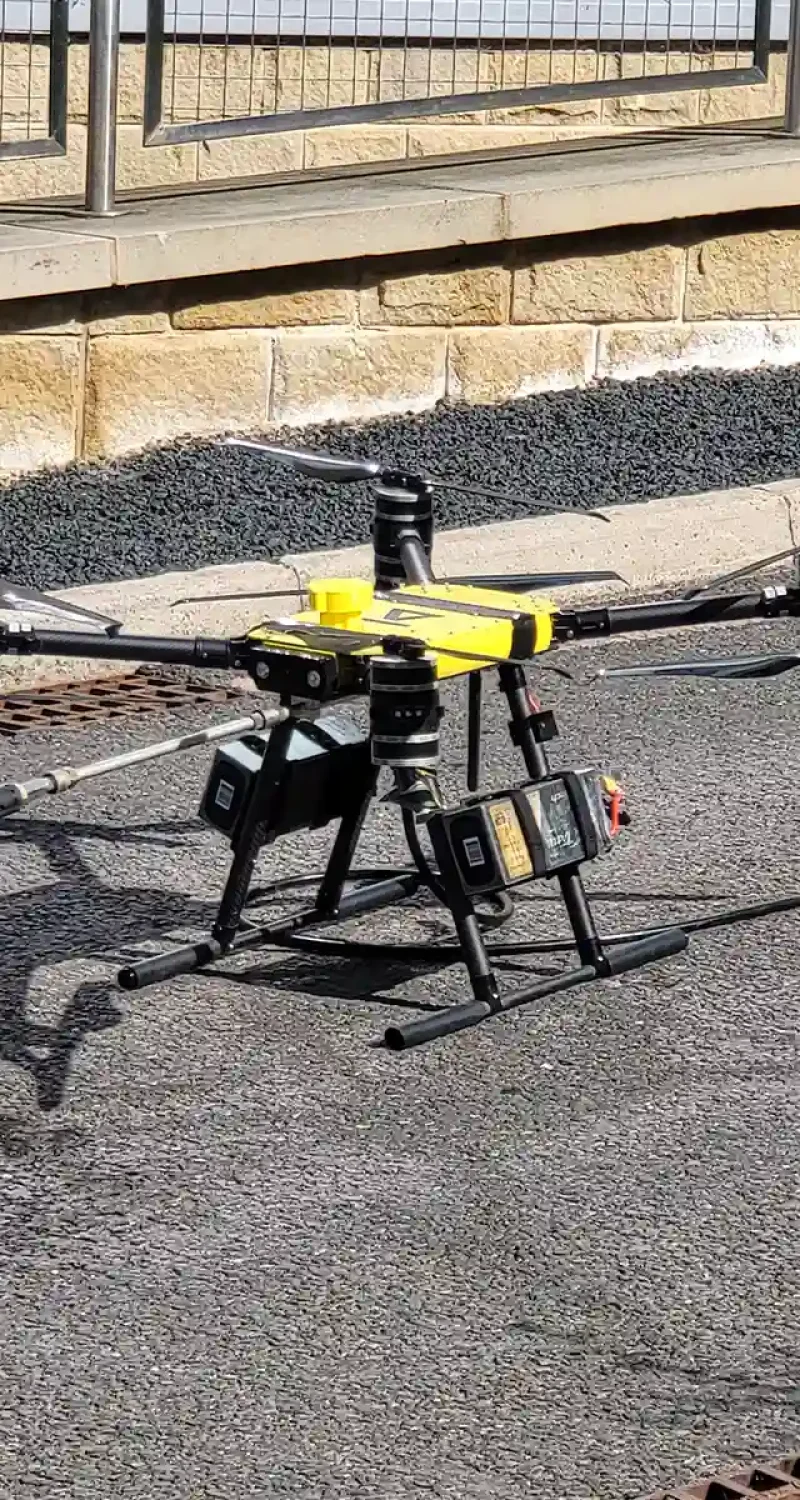
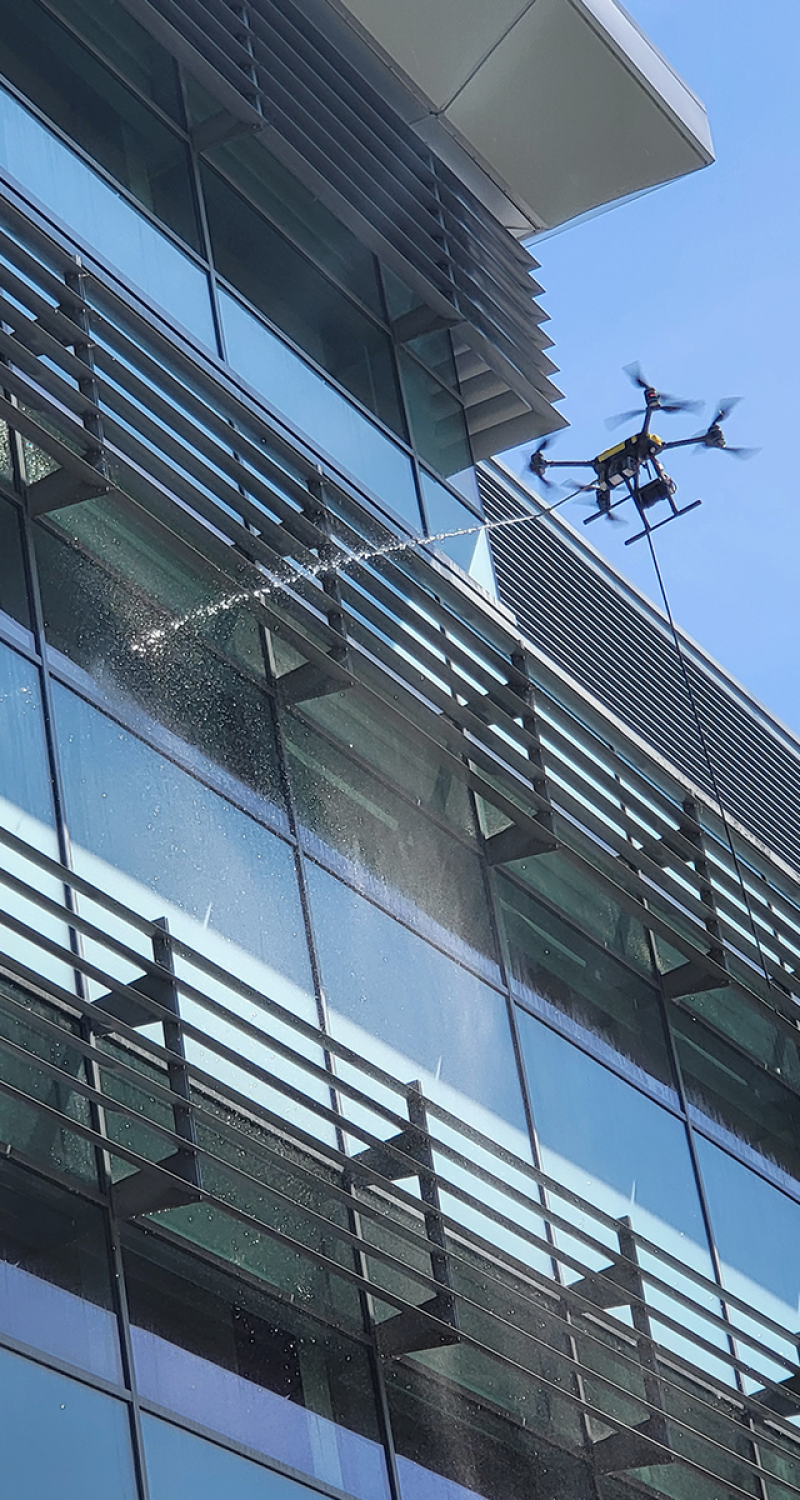
Leeds’ architectural diversity demands equipment flexibility rather than standardised approaches. Trinity Leeds requires wide area coverage across extensive glazing. Bridgewater Place needs precision application to specific façade sections. Heritage buildings demand controlled pressure appropriate to substrate sensitivity. Each application receives technical configuration matching specific requirements.
Cleaning solution chemistry adjusts to contamination type and surface material. Urban deposits accumulating on modern glass require different treatment than biological growth on heritage stonework. Solution concentration, application method, and dwell time match substrate characteristics and contamination severity. Technical decisions prioritise effective cleaning without surface damage.
Weather monitoring coordinates operations with suitable conditions. Wind speed affects drone stability and cleaning solution application. Temperature influences solution effectiveness. Precipitation timing determines cleaning schedules. Operations plan around meteorological realities rather than proceeding regardless of conditions affecting quality or safety.
Project coordination addresses Leeds city centre complexity. Pedestrian safety requires temporary zones during operations. Building occupants receive advance notification. Parking restrictions facilitate equipment positioning. Effective delivery integrates regulatory compliance with operational efficiency, ensuring projects proceed smoothly rather than encountering preventable complications.
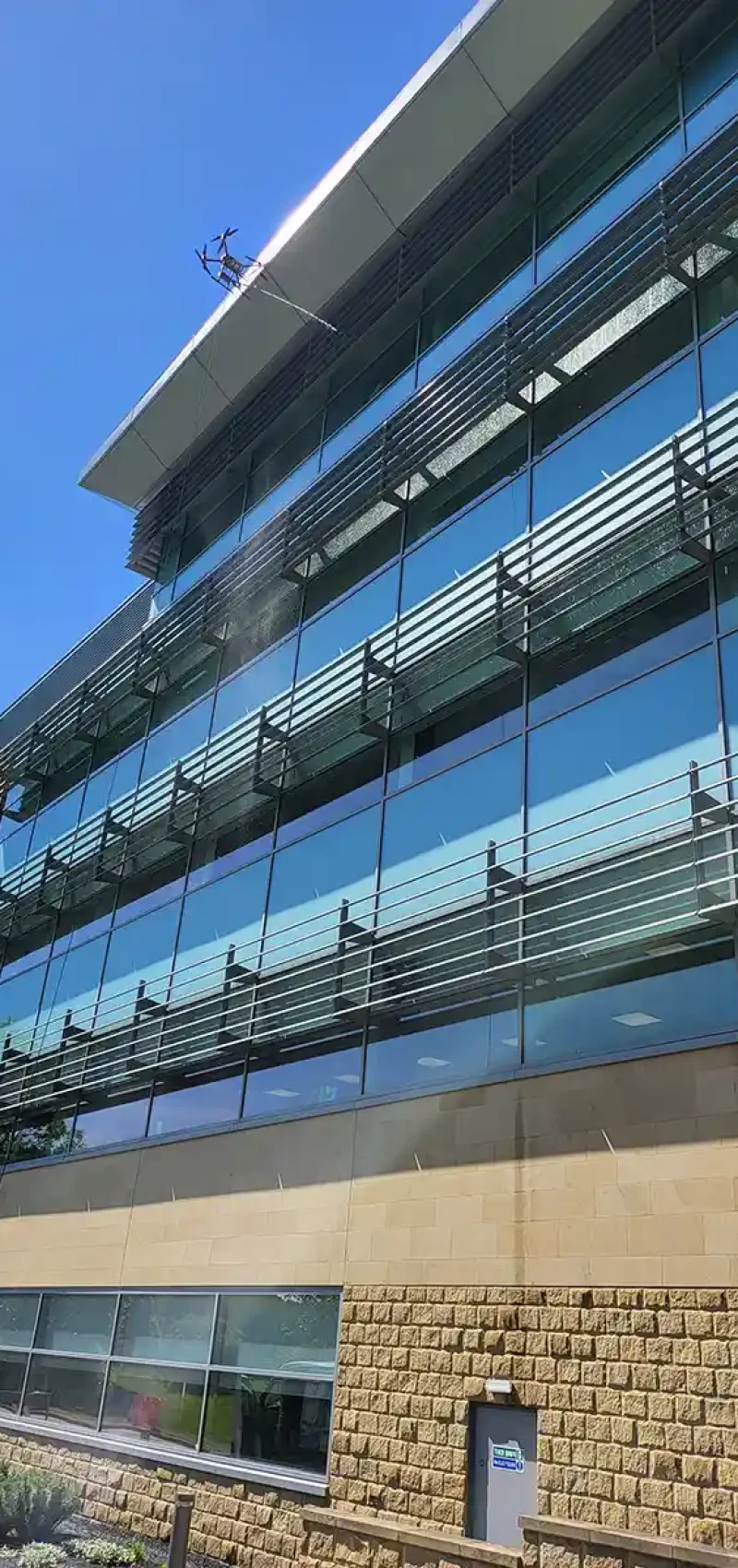
Drone cleaning delivers maximum value within comprehensive facility management. Leeds businesses combine specialist façade maintenance with routine industrial cleaning and industrial cleaning in Leeds supporting overall building standards. Coordinated service delivery simplifies supplier relationships whilst maintaining consistent quality across all facility maintenance activities.

Our accreditations including CHAS, Safe Contractor, ISO 9001, and ISO 14001 demonstrate systematic approaches satisfying procurement requirements. CAA compliant operations ensure regulatory compliance throughout all drone activities. Operators hold appropriate certifications addressing equipment operation and safety management. Insurance coverage protects all parties whilst risk assessments address site specific hazards before work commences.
Our approach emphasises understanding client operations rather than applying generic solutions. Leeds businesses receive service recognising their specific requirements, operational constraints, and building characteristics. Commercial retail demands minimal disruption. Healthcare facilities require infection control awareness. Heritage buildings need preservation appropriate methods. Each sector receives appropriate specialist knowledge.
Leeds building managers should evaluate whether current cleaning arrangements actually serve operational needs. Does scaffolding hire consume excessive budgets? Do access complications defer necessary maintenance until appearance deterioration forces action? Does cleaning disrupt business operations reducing revenue during projects? Do traditional methods prove incompatible with building architecture or operational schedules?
Contact us to discuss specific cleaning challenges. Call 0333 240 1145 or message through our website. Our Leeds team understands local commercial operations and delivers drone cleaning solutions supporting building presentation without the access complications traditional methods create.
We’re ready to demonstrate how aerial technology maintains Leeds’ diverse building stock, from Trinity Leeds’ retail environment to Bridgewater Place’s corporate offices, without the costs, disruption, or extended timescales conventional cleaning demands.
