Automotive and vehicle manufacturing facilities operate some of the most demanding production environments in UK industry, combining press shops, paint shops, assembly lines, machine shops, and parts warehousing within a single site. Continuous shift patterns and strict quality requirements mean cleaning cannot pause production, yet contamination from oil, coolant, and metal particulate accumulates constantly across working areas. Sentrex delivers industrial cleaning addressing the production floor, machinery, and warehouse environments across the UK’s industrial, manufacturing, and warehousing sector.


Press shops and machine shops generate metal particulate, cutting fluid residue, and general production debris that accumulates across floors and machinery surfaces throughout each shift. Paint shops demand a different standard entirely, where airborne dust and contamination directly affect finish quality and require cleaning protocols suited to controlled environments.
Assembly lines combine multiple work zones within a single continuous process, meaning cleaning has to work around moving production rather than confined to a single overnight window. Parts warehousing and component storage areas require floor and racking cleanliness that supports accurate stock handling and prevents contamination reaching the production line.
Engineering test facilities and quality control areas within automotive sites carry their own cleanliness requirements, where measurement accuracy and product testing depend on controlled, contamination free environments.
Contamination in automotive manufacturing affects more than presentation. Metal particulate and cutting fluid residue on production floors create slip hazards and reduce the effectiveness of safety markings. Dust and airborne contamination in paint shop environments directly affect finish quality, turning a cleaning issue into a product quality issue.
Standard commercial cleaning methods are not built for this environment. Automotive manufacturing requires cleaning that understands machinery, production processes, and the materials involved, from coolant and hydraulic fluid to welding residue and metal swarf. Cleaning teams working across these environments need training suited to the hazards present.
Downtime carries a direct cost. Contaminated machinery runs less efficiently and wears faster, and production stoppages for cleaning that could otherwise happen around a shift pattern represent lost output. Specialist scheduling protects both safety and productivity.
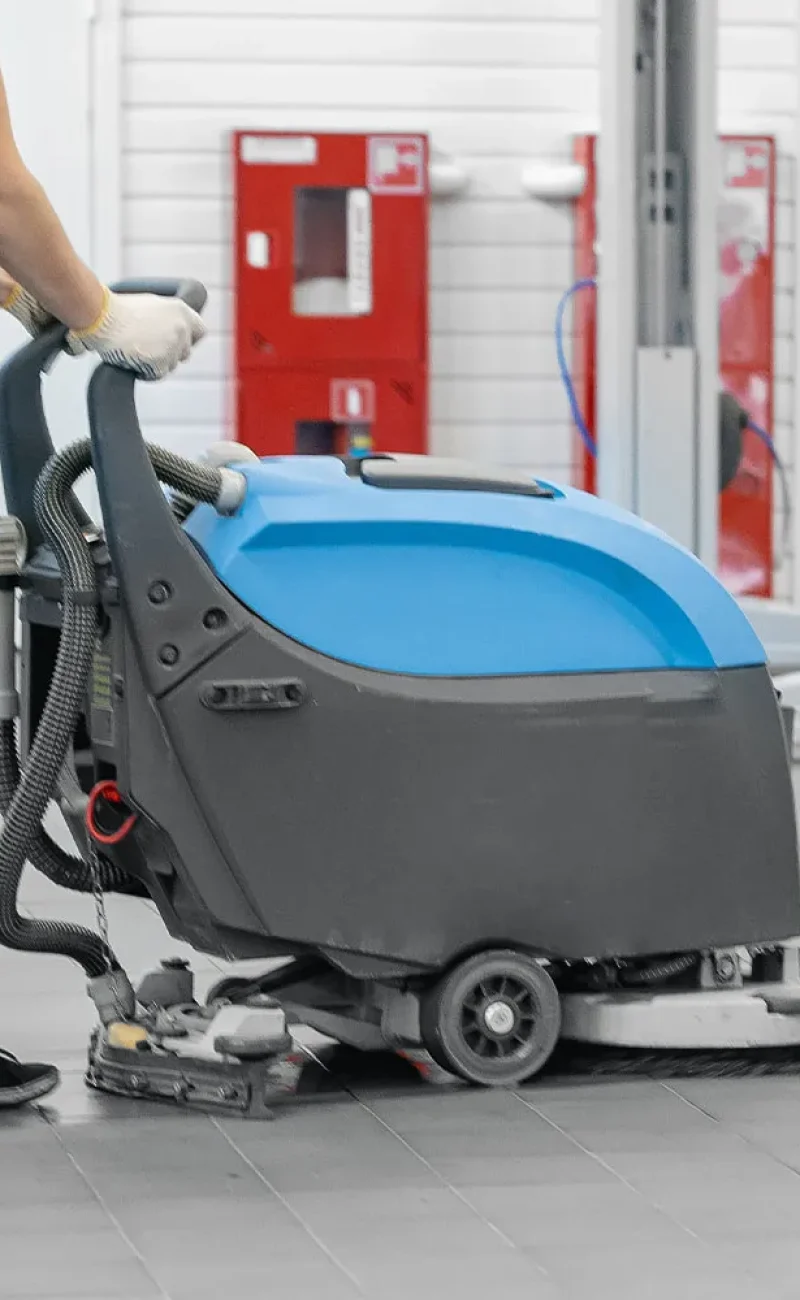
Machinery cleaning removes oil, grease, and production residue from press shop and machine shop equipment, supporting both safety and equipment longevity. Industrial deep cleaning addresses planned production shutdowns, when facilities can undertake thorough cleaning across areas otherwise inaccessible during live production.
Floor cleaning maintains production floor safety across assembly lines and machine shop areas, removing contamination before it accumulates into a hazard. Warehouse cleaning addresses parts storage and component handling areas, keeping racking and floor space clear for accurate stock movement.
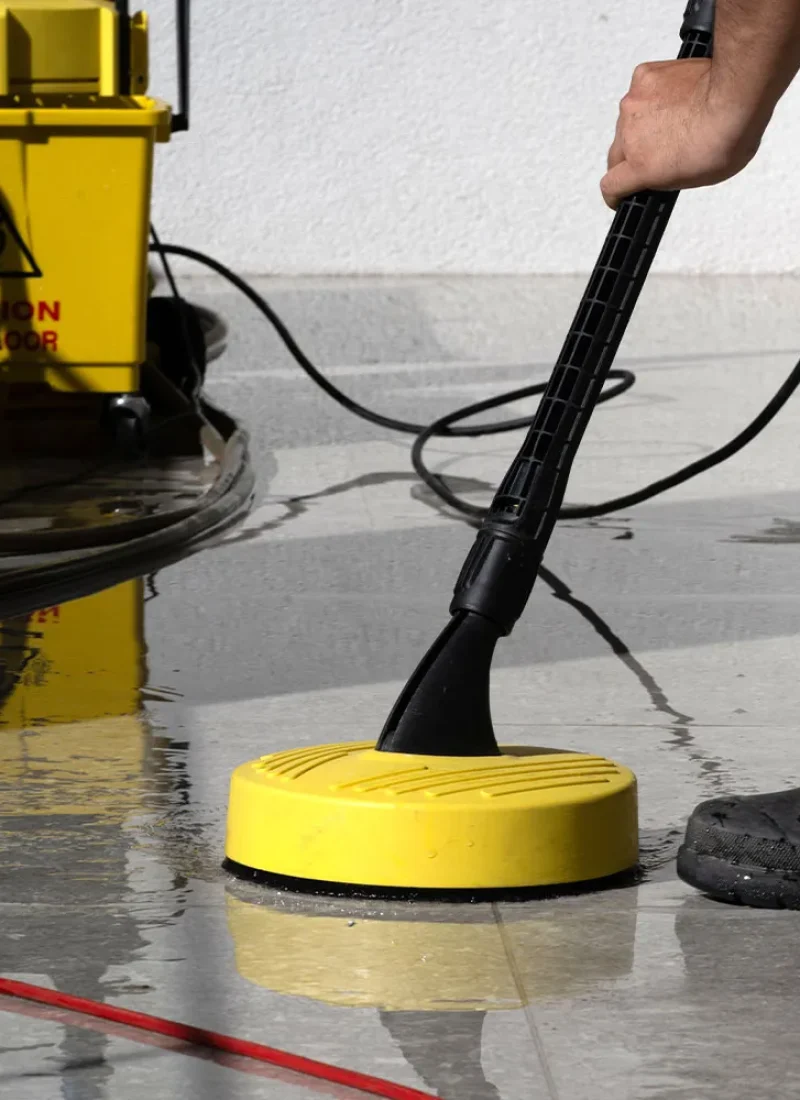
Jet washing addresses external yard areas, vehicle preparation zones, and heavily soiled surfaces that standard cleaning methods cannot reach, supporting sites where vehicles or components move between indoor and outdoor areas.
Automotive manufacturing rarely stops. Continuous shift patterns mean cleaning needs to work around live production rather than dictate the schedule, with teams trained to operate safely alongside moving machinery and vehicle assembly processes. Our guide to COSHH compliant cleaning across production shifts sets out how cleaning schedules integrate with continuous manufacturing environments without compromising safety.
Planned shutdown periods offer the opportunity for deeper intervention, addressing areas that live production makes difficult to reach safely. Coordinating cleaning schedules around planned maintenance and shutdown windows delivers a more thorough result than attempting the same work during live operation.
Facility managers scheduling professional cleaning services around production calendars rather than fixed weekly patterns get more value from each visit, with work planned to match the site’s actual operational rhythm.
Automotive manufacturing generates hazardous waste streams including used oils, solvents, and contaminated materials requiring careful handling. Our hazardous waste cleaning service manages these materials safely, working alongside our wider waste management support to keep sites compliant.
Our guide to ISO accredited cleaning across industrial and warehouse environments sets out the standards that matter most to automotive manufacturers, many of whom operate within supply chains requiring documented, auditable cleaning practices from every contractor on site.
COSHH regulations govern the handling of chemicals and hazardous substances present throughout automotive manufacturing, from paint shop solvents to machine shop cutting fluids. Cleaning teams working in these environments need training and procedures that satisfy these obligations consistently, not just during scheduled audits.

Automotive and vehicle manufacturing operations often span multiple UK sites, and our industrial cleaning presence in Liverpool, home to major automotive manufacturing at Halewood, reflects the regional depth needed to support this sector consistently.
Multi site automotive operations benefit from a single cleaning partner working to the same standards across every location, rather than managing different contractors with inconsistent methods and reporting from site to site. Coordinated scheduling and unified reporting give group facility managers visibility across their full manufacturing footprint.
Our accreditations including CHAS, Safe Contractor, ISO 9001, and ISO 14001 demonstrate systematic approaches satisfying the procurement requirements automotive manufacturers and their supply chains expect. Trained operatives understand production environments, machinery, and the hazardous materials present across manufacturing sites.
Our approach emphasises understanding automotive manufacturing operations rather than applying standard commercial cleaning methods to a specialist environment. Press shops, paint shops, assembly lines, and parts warehousing each carry different cleaning demands, and our teams work to method statements suited to each.
Automotive and vehicle manufacturing facility managers running press shops, paint shops, assembly operations, or parts warehousing can contact us on 0333 240 1145 to discuss industrial cleaning addressing production floor standards, machinery cleanliness, and compliance obligations across the automotive manufacturing sector.
