
In a UK manufacturing environment, the decision to take a production line offline is never made lightly. Traditional cleaning often means stripping equipment down, and every bolt removed and every component set aside adds to the risk of error during reassembly. Plant managers therefore want to know whether hygiene and operational standards can be met without a full strip down. In many cases, dry ice blasting can clean machinery in place, because it is dry, leaves no blasting media behind and works through impact and thermal shock rather than water or chemicals.
This matters because machinery cleaning usually has to fit into a tight maintenance window. Cleaning a machine where it stands keeps its alignment, its calibration and its seals undisturbed. This article explains how that works, what needs protecting, and where dismantling is still the right call.
How Dry Ice Reaches Parts Without Taking Them Apart
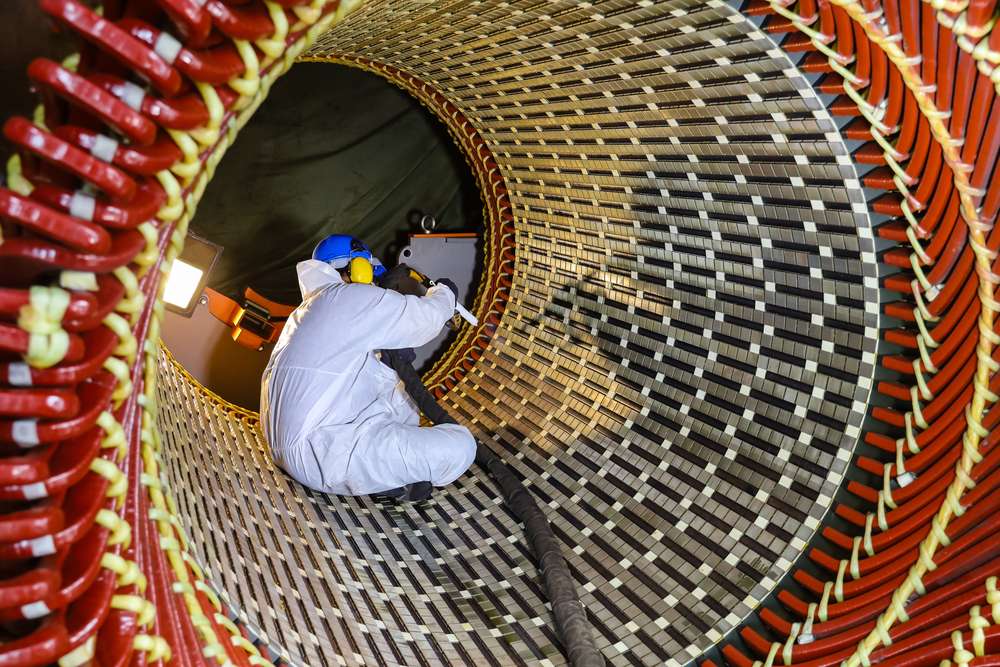
The core of the process is sublimation. When a dry ice pellet hits a surface, it turns from a solid directly into a gas. The rapid expansion lifts grease, carbon deposits and industrial adhesives away from the substrate. Because the pellets disappear on impact, there is no grit or sand left in gears, chains or bearings. This allows technicians to clean into the crevices of complex assemblies without removing covers or guards to reach hidden surfaces.
Other methods struggle with the same task. Jet washing introduces water that must be kept away from sensitive parts, and abrasive media can lodge inside the equipment. Dry ice avoids both problems. The limit is access. The nozzle can only clean what the stream can reach, so a site survey establishes which parts of a machine can be treated in place before work is planned.
Preparing Machines and Protecting Components
Working around production equipment takes a specific level of expertise. Every machine has its own pressure tolerances, and the right settings keep labels, gaskets and seals intact while the surrounding grime is removed. Sentrex places significant emphasis on staff training, supported by training assessments, so operatives understand the balance between pressure and proximity. Supervisors oversee the work on site.
Preparation matters as much as technique. Machines are isolated and made safe before cleaning begins, which is a legal and practical requirement. Choosing industrial deep cleaning that uses dry ice protects the asset whilst reaching a level of cleanliness that manual scrubbing struggles to match.
Protecting Sensitive Electrical and Pneumatic Systems
Electrical components are one of the biggest obstacles to cleaning machinery in place. In a standard wash down, control panels, wiring looms and sensors must be bagged or removed to prevent moisture damage. Dry ice leaves no moisture and does not conduct electricity, so components can often be cleaned whilst still mounted to the machine frame, provided the equipment has been isolated first. HSE electrical safety guidance explains how to assess and control those risks.
This is particularly valuable in automotive and vehicle manufacturing cleaning, where robotic arms and complex wiring are central to production. Because no abrasive media is used, there is nothing to become trapped inside switchgear or pneumatic valves and cause premature failure. For a closer look at the safety side, see whether dry ice blasting is safe to use around electrical equipment before your next scheduled maintenance.
Where Cleaning in Place Works Best
Different sectors face different challenges when they try to clean without dismantling. Some need to remove charred food waste, and others need to remove industrial oils. In each case, cleaning in place avoids the disturbance that comes with taking a machine apart.
In food production cleaning, residues in hard to reach areas can threaten product quality, and water can leave damp corners behind. Dry ice allows deep bakery and food processing facility cleaning of conveyors, ovens and mixers without adding moisture, which shortens the wait before inspection. In engineering workshop and fabrication cleaning, it removes oil and swarf residue without moving heavy components.
The same logic applies to larger plant. In heavy industry and process plant cleaning, every teardown carries a chance of cross threading a bolt or misaligning a belt, so cleaning in place reduces that risk. Sensitive laboratory and research facility cleaning benefits too, because cleaning in place preserves the calibration of instruments that mechanical dismantling could disturb. After an incident, post fire cleaning services can use dry ice to lift soot from expensive machinery without adding surface wear.
When Dismantling Is Still Necessary
Cleaning in place is not always possible. Some machines have enclosed cavities that the nozzle cannot reach, and some components need to come out so that internal wear can be inspected. In those cases, partial dismantling is the safer choice. The site survey identifies these parts in advance, so the dismantling is limited to what is needed. This means that clients do not strip down whole machines when only one assembly requires access.
Cleaning in place also gives engineers a clear view of the machine. Operatives can flag a worn bearing or a frayed belt during the clean, which allows issues to be resolved before they cause a breakdown.
Local Teams and Accredited Delivery
Sentrex delivers this work across the UK through regional teams. That includes dry ice blasting in Leeds for engineering and fabrication sites, dry ice blasting in Birmingham for automotive and high volume manufacturing, and dry ice blasting in Warrington for logistics and chemical sites. In the North West, it also covers Bolton, Bury, Rochdale and dry ice blasting in Stockport.
The process also suits sites that report on waste and sustainability. Sentrex holds EcoVadis Silver accreditation, placing it in the top 15% of assessed businesses globally for sustainability performance, and is a ProcurePublic Framework Partner. Both are listed on its accreditations page. This is relevant to industrial manufacturing and warehousing sites that run around the clock, because less waste to collect means a faster return to production.
Maximising the Value of Industrial Equipment Maintenance
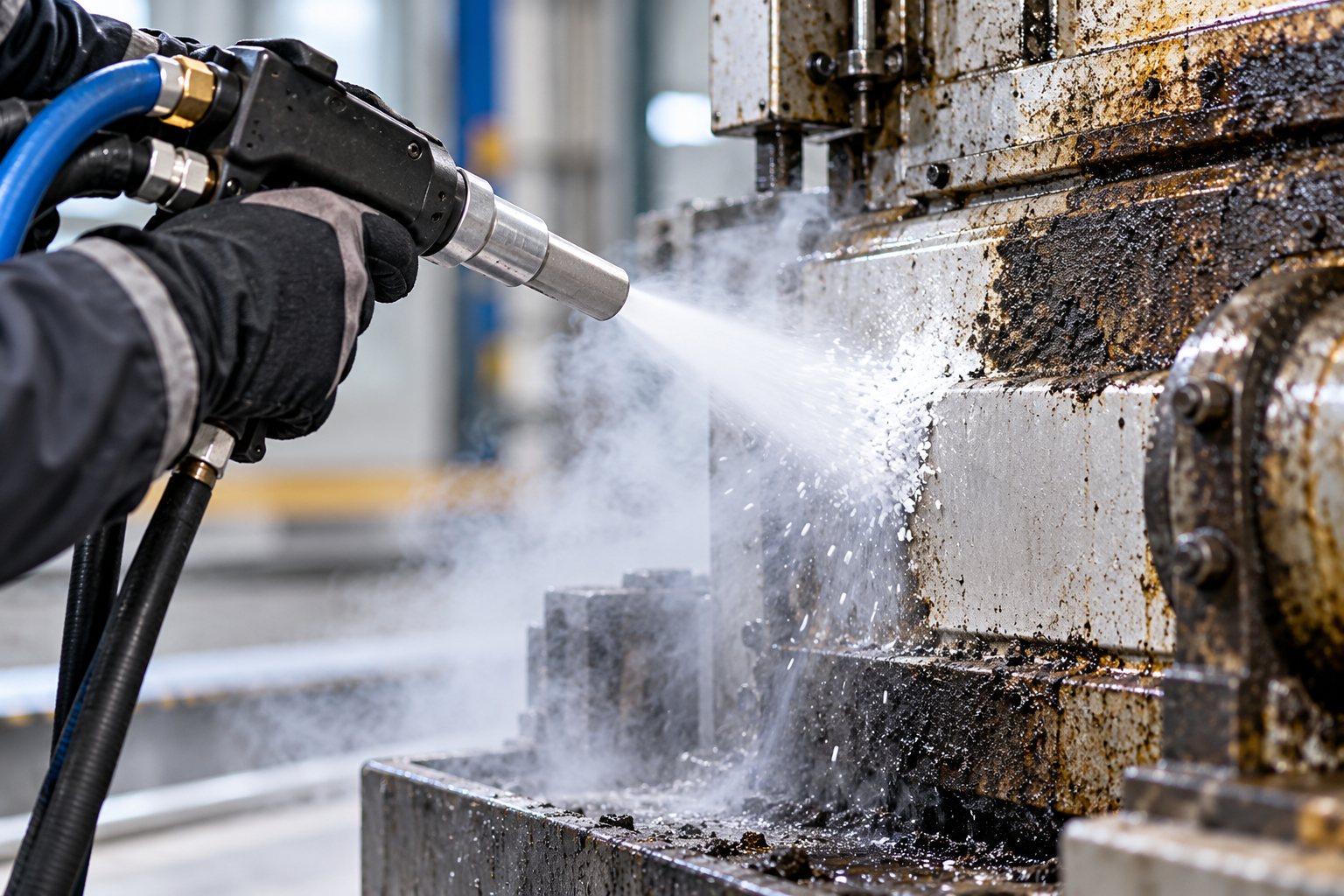
The goal of any maintenance programme is to extend the life of the asset whilst keeping costs under control. Cleaning machinery without dismantling it helps by reducing the wear and tear that comes with repeated mechanical handling. Planned professional cleaning services also give a manufacturing group cleaning across multiple sites a consistent standard of hygiene, which supports audit success.
If your facility wants to move away from long shutdowns and towards a more flexible maintenance schedule, the first step is a site assessment. You can contact us to discuss how cleaning in place can fit into your next production gap. To understand which jobs suit this method, read what dry ice blasting is and when manufacturers should use it. Working with specialist cleaning experts keeps your production lines clean and operational, with less disruption to your output.


