
In a busy manufacturing environment, the clock is often the most expensive piece of equipment on the floor. When a line stops for scheduled maintenance, every hour spent scrubbing, scraping or waiting for components to dry is lost output. Traditional methods frequently require machinery to be dismantled, cleaned with solvents or water, and reassembled before a single unit can be produced. Operations managers increasingly see this cycle as a bottleneck in their existing assets.
Dry ice blasting shortens that cycle. It uses solid carbon dioxide pellets accelerated by compressed air to remove contaminants through thermal shock and kinetic energy. The pellets sublimate on impact, which means they turn from a solid into a gas, so no moisture or abrasive residue is left to clear up. This means that each stage that normally adds hours to a shutdown can be reduced. If you are new to the method, start with what dry ice blasting is and when manufacturers should use it.
Where the Time Goes in Conventional Cleaning
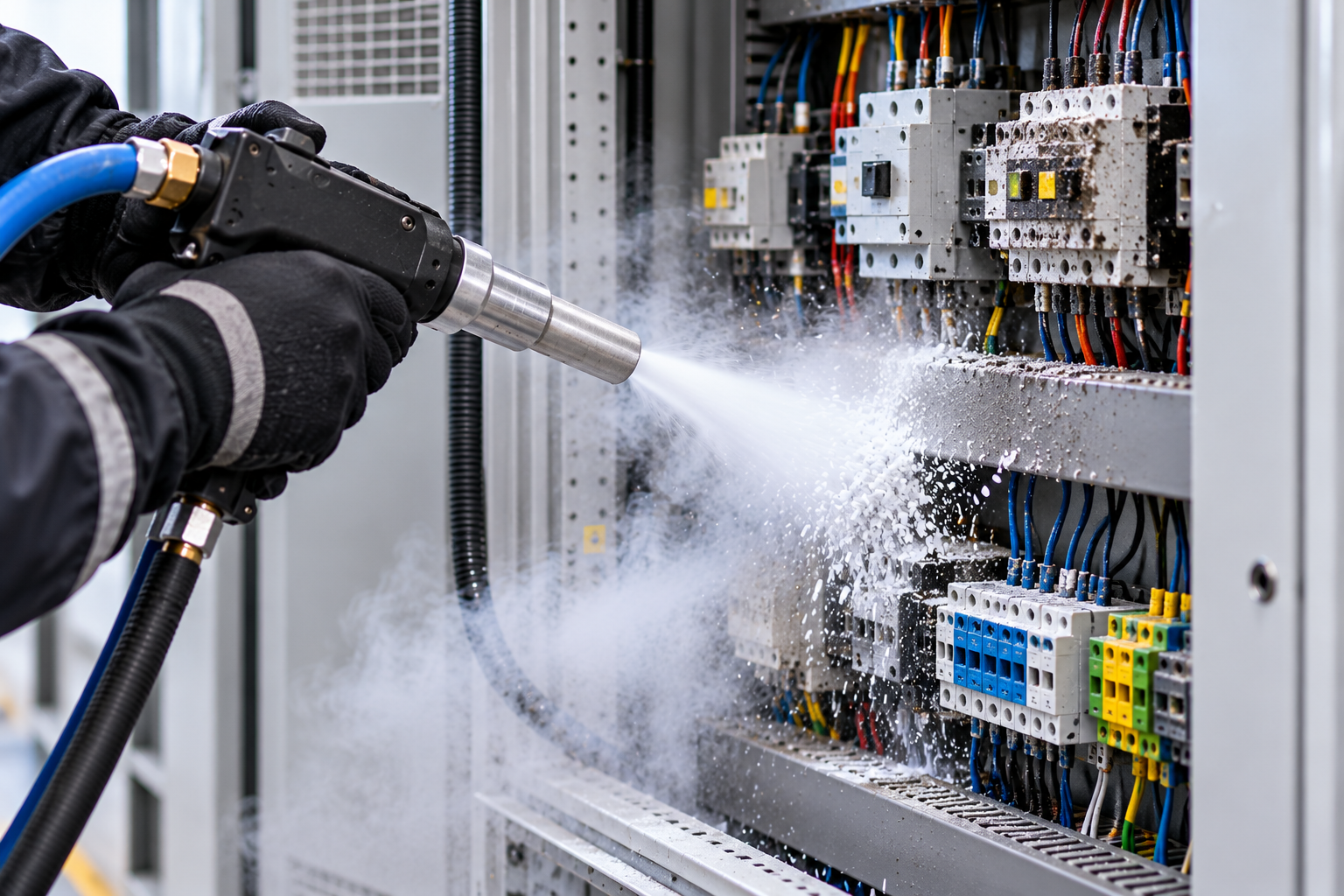
A conventional clean has several time costs. Technicians must first gain access to internal gears, chains and sensors, which often means hours of labour before cleaning can start. In industrial cleaning, the sheer scale of the equipment can turn manual disassembly into a multi day task. This is particularly true in heavy industry and process plant cleaning, where components are exceptionally large.
The clean itself is followed by a wait. Machines must cool, dry and be reassembled before they can be tested. Waste then has to be cleared from the floor. Each of these steps extends the shutdown, and each is a point where dry ice blasting can save time.
The Practical Impact of Cleaning Warm and Assembled
Dry ice blasting allows many machines to be cleaned in place and, in some cases, whilst still warm. This means that clients can reduce or skip the cool down and strip down phases that normally come first. The saving depends on the machine, the contamination and the access available, so Sentrex confirms what is realistic during the site assessment rather than promising a fixed figure. Operatives work to a risk assessment throughout, and equipment is isolated before cleaning begins.
For operations directors, the result is a shorter maintenance window and a faster return to full capacity. Sentrex supports these tasks locally, including dry ice blasting in Birmingham and dry ice blasting in Leeds.
Eliminating the Drying Phase for Faster Restarts
Water based and steam methods introduce moisture. In settings that need machinery cleaning, even a small amount of residual water can cause flash rusting on sensitive parts or short circuits in control systems. Even when jet washing is used for external areas, that moisture has to be managed. The wait for a machine to be ready for production after a wet clean can be as long as the clean itself.
Dry ice removes that waiting period. There is no drying phase, so the machine can be returned to service as soon as it has been checked and confirmed safe. This is particularly valuable in laboratory and research facility cleaning settings, where calibration and environmental control are sensitive to humidity and chemical vapours. Blasting does cool surfaces, so condensation is controlled before equipment is re energised. For the full safety picture, read whether dry ice blasting is safe to use around electrical equipment. The short answer is yes when equipment is isolated first.
Secondary Waste and Cleanup Time
Abrasive cleaning such as sandblasting or bead blasting creates a secondary waste problem. The spent media must be swept, vacuumed and disposed of, and in some cases it counts as hazardous waste. This cleanup is a hidden drain on maintenance time, whether in an engineering workshop and fabrication cleaning environment or a large warehouse.
Dry ice disappears on impact, so the only material left to tidy up is the contaminant that was removed. This is a clear advantage for sites needing dry ice blasting in Bolton, Bury and Rochdale, where waste disposal costs and environmental compliance are high priorities. A cleaner site with less waste to manage lets the maintenance team move on to the next task sooner. It also supports sustainability goals. Sentrex holds EcoVadis Silver accreditation, placing it in the top 15% of assessed businesses globally for sustainability performance, as listed on its accreditations page.
Protecting Components Between Shutdowns
A major concern for plant engineers is the long term wear caused by repeated cleaning. Scrapers, wire brushes and harsh chemicals can degrade surfaces, leading to early part replacement and unplanned outages. Dry ice is a soft medium that removes grease, carbon build up and adhesives without damaging the substrate when it is set correctly. This is essential in automotive and vehicle manufacturing cleaning, where precision finishes matter.
Because the method is gentle, it supports more frequent industrial deep cleaning and preventative maintenance. Instead of waiting for a machine to fail or for build up to become critical, operators can schedule short, regular cleans that keep machinery in good condition. It is also suited to bakery and food processing facility cleaning, where hygiene and equipment integrity are both critical.
Removing Burnt On Residues From Hot Equipment
Burnt on residues, fats and debris are difficult to remove from ovens and conveyors. In a production line or industrial manufacturing and warehousing setting, being able to clean warm equipment without water is a clear operational gain. It supports compliance with safety standards whilst protecting line speeds. In more extreme cases, post fire cleaning services can use the same method to remove smoke and soot without causing further damage to the structure.
Operational Safety and Professional Standards
Switching to a new cleaning method requires a disciplined approach to safety and site management. Dry ice turns into carbon dioxide gas, which can build up in poorly ventilated areas, and the equipment is loud. HSE publishes workplace exposure limits for carbon dioxide, and the Control of Noise at Work Regulations 2005 cover noise. Both risks need to be planned for before work starts.
Sentrex prioritises staff training, supported by training assessments, so every technician working in Birmingham, Leeds, Stockport or Warrington understands carbon dioxide safety, pressure settings and noise management. As a ProcurePublic Framework Partner, Sentrex documents and audits its work, which gives plant managers a clear record for internal stakeholders and regulators.
Scheduling professional cleaning services through a structured facilities partner also improves coordination between the cleaning crew and the engineering team. This allows issues to be resolved quickly, such as a worn bearing or a frayed belt spotted during the clean, which might otherwise have caused a breakdown later in the week.
Improving Efficiency Across Multiple Sites
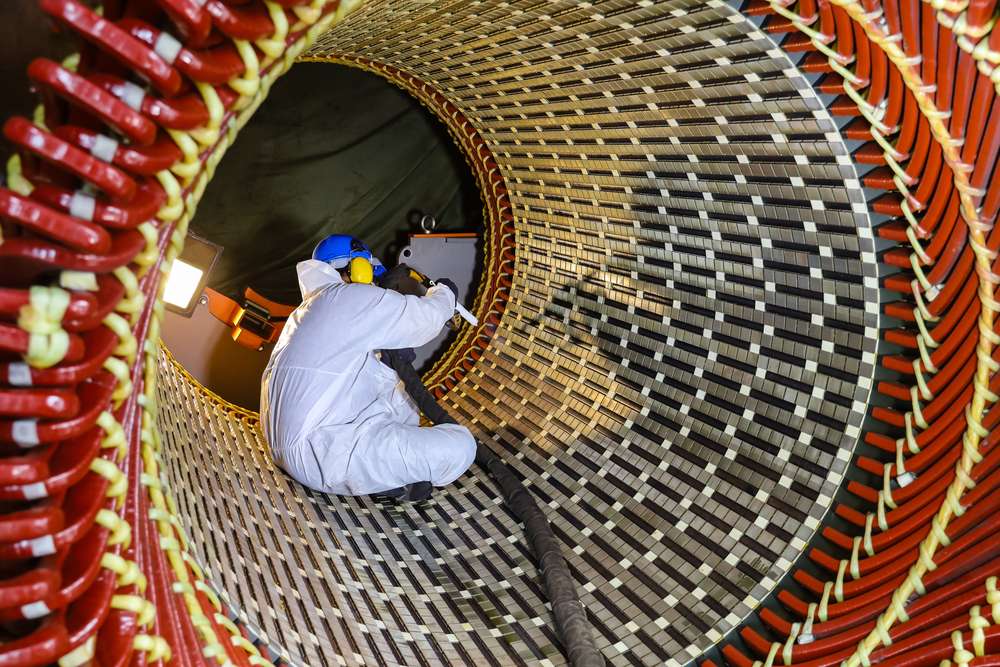
For organisations managing several plants, consistency drives overall profitability. Sentrex provides manufacturing group cleaning across multiple sites so that the same standard is applied everywhere. If one plant uses dry ice blasting whilst another relies on manual scraping, the difference in uptime shows up in the quarterly reports. Standardising on a faster method across the estate helps every facility operate closer to its potential.
This joined up approach to specialist cleaning applies to environments as varied as sooty fire damage and oily machinery residues, and it matters most in food production cleaning, where strict sanitation deadlines must be met.
If you want to review your current maintenance windows or see how dry ice could fit your production environment, the next step is to speak with a specialist. The Sentrex team can assess your machinery and show where the greatest time savings are likely to be made. You can contact us today to discuss your requirements.


