
Productivity is one of the most scrutinised metrics in any business. Managers analyse workflows, review software tools, refine meeting structures, and invest in training to move the needle. What rarely features in that conversation is the physical environment in which work happens, and specifically whether it is clean enough to support the performance levels the business is trying to achieve. The connection between office hygiene and output is not theoretical. It operates through absenteeism, concentration, staff morale, and the cumulative effect of working in a space that undermines health rather than supporting it.
What an Unclean Office Actually Costs
The financial case for office cleanliness is more straightforward than most businesses realise. Illness is the most direct line item. When shared surfaces, equipment, and communal areas are not properly disinfected, bacteria and viruses circulate more freely through the workforce. Staff get ill more often, absences increase, and the remaining team carries the load of covering for colleagues who are out. In a small or medium sized business, even a modest increase in sick days across the team represents a measurable cost in lost output, overtime, and disruption to client facing work.
Beyond the direct cost of absence, there is the subtler cost of presenteeism, where staff are at their desks but not functioning at full capacity because they are unwell, tired, or distracted by an environment that feels uncomfortable. A poorly maintained office signals to staff that their working conditions are not a priority, and that signal has consequences for engagement and effort that are harder to quantify but no less real.
Understanding whether professional office cleaning is worth the investment becomes a different question when it is set against the full cost of what poor hygiene standards are already taking from the business.
The Health Impacts That Reduce Output
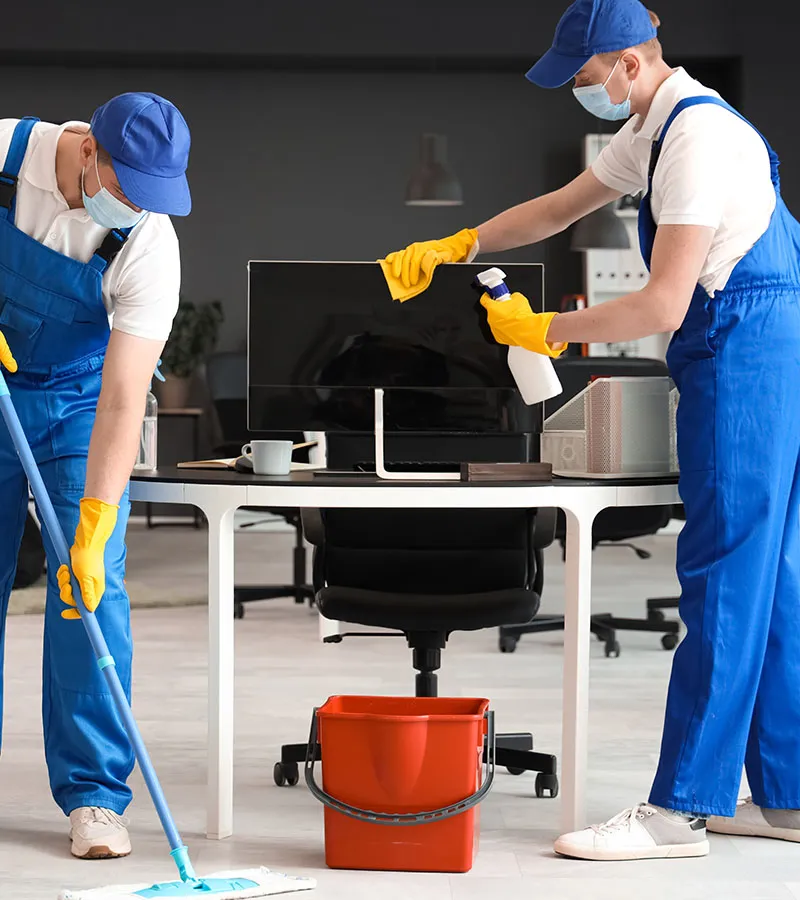
Poor office hygiene affects staff health through several overlapping mechanisms. Shared equipment and surfaces that are not regularly disinfected act as transfer points for pathogens. Everyday office items that never get cleaned properly carry bacterial loads that most people in the office would find alarming if they were aware of them, and those loads increase with every passing day between proper cleans.
Dust accumulation in poorly maintained offices also has a measurable effect on air quality. Ventilation grilles, soft furnishings, and surfaces beneath and behind furniture all accumulate particles that are redistributed into the breathing environment throughout the working day. Staff who are sensitive to airborne allergens experience this most acutely, but the broader effect on respiratory comfort and concentration is felt across the workforce. Headaches, fatigue, and recurring minor illness are frequent symptoms of a workspace that has been maintained to a presentable standard but not to a genuine hygiene standard.
Illness Patterns and Absence Rates
The relationship between shared workspace hygiene and illness transmission is well documented. Offices where frequently touched surfaces are not regularly disinfected see faster spread of seasonal illness through the team, meaning that a single case of a cold or virus affects a larger proportion of staff before it runs its course. In open plan environments, where shared equipment and proximity compound the risk, this effect is more pronounced.
How often an office should be cleaned is a question that many businesses answer based on budget or habit rather than on the actual hygiene demands of the space. In practice, the right frequency depends on the number of people using the office, the nature of the work being done, and the specific surfaces and equipment that need to be maintained. A programme that was set up when the office had ten people may no longer be adequate for a team of thirty.
Air Quality and Cognitive Performance
The connection between indoor air quality and cognitive performance is increasingly well evidenced. Studies across multiple work environments have found that poor air quality, including elevated levels of fine particles and volatile compounds, correlates with reduced concentration, slower decision making, and lower overall output. In office environments where dust and particulate matter are not actively managed, the quality of the air staff are breathing throughout the day falls below the standard that supports peak cognitive function.
This is one of the less obvious ways that inadequate office cleaning affects productivity, operating below the threshold of conscious awareness but contributing to the sense of fatigue and difficulty concentrating that many office workers attribute to the nature of their work rather than the condition of their environment.
The Psychological Effect of a Dirty Workplace
Beyond the direct physical health impacts, the state of an office has a significant effect on how staff feel about the place they work and the organisation they work for. A clean, well maintained workspace communicates that the business takes the working environment seriously. An office with dirty kitchens, uncleaned toilets, dusty surfaces, and neglected communal areas communicates the opposite, and staff notice.
The relationship between a cleaner office and employee morale is not simply about aesthetics. It is about the message that the physical environment sends to the people working in it. Staff who feel that their employer invests in their working conditions are more likely to feel valued, more likely to engage with their work, and more likely to remain with the organisation. The inverse is also true.
First Impressions for Clients and Visitors
Productivity is an internal metric, but the state of an office also affects the impression it creates on clients, candidates, and business partners who visit. A meeting room with a dusty surface, a kitchen that has not been properly cleaned, or a reception area that feels neglected undermines the confidence a business is trying to build through its work and its reputation. What office cleaners notice that staff always miss is precisely the category of detail that a first-time visitor picks up on immediately, because they do not have the familiarity that makes it invisible to the people who work there every day.
What Gets Missed and Why It Matters

The items and areas that contribute most to poor office hygiene are not the ones that are deliberately neglected. They are the ones that fall outside the scope of what routine cleaning covers, or that have no clear owner in the cleaning programme. Shared equipment, frequently touched surfaces, communal appliances, and areas beneath and behind furniture all accumulate contamination at rates that a surface level cleaning schedule does not address.
Office cleaning secrets that staff would benefit from knowing and guidance on how to keep an office clean between professional visits both speak to the gap between a workspace that looks tidy and one that is genuinely maintained to a hygiene standard. The two things require different approaches, and understanding the difference is the starting point for addressing it.
The following are the most consistent areas where inadequate office cleaning has a direct effect on staff health and output:
- Shared equipment including keyboards, mice, phones, and printers that carry significant bacterial load but receive no scheduled disinfection
- Communal kitchen and breakout areas where food preparation surfaces and shared appliances are cleaned superficially but not to a food safe hygiene standard
- Ventilation grilles, skirting boards, and surfaces beneath furniture where dust accumulates and recirculates into the breathing environment
- Toilet and washroom facilities where inadequate cleaning frequencies allow bacterial accumulation that staff are acutely aware of and that affects their experience of the workplace as a whole
Building a Cleaning Programme That Supports Performance
Addressing the productivity impact of poor office cleaning does not require a wholesale change to how a business operates. It requires a cleaning programme that is structured around how the office actually functions, what surfaces and equipment are used most, and at what frequencies different areas need to be properly maintained.
Professional office cleaning delivers the systematic approach that in-house tidying cannot replicate, covering shared equipment, frequently touched surfaces, and the areas most consistently missed alongside the floor and surface cleaning that routine programmes address. The cost of that provision, examined through guides on how much office cleaning costs, what cleaners charge and how to get value, and how costs break down per square foot, looks different when it is set against the cost of the absence, disengagement, and lost output that a poorly maintained office generates.
At Sentrex, we work with businesses to build office cleaning programmes that are matched to the specific demands of each workplace. Our accreditations reflect the standards we apply on every site we service. If you would like to discuss what a programme could look like for your office, get in touch with the team.


