
For most employees, the office is a landscape of screens, swivel chairs, and the occasional stack of paperwork. Their interaction with the workspace is purely functional.
That being said, they will still notice when a bin is overflowing or when the milk in the fridge has turned. However, professional office cleaners view the environment through a completely different lens, they see the office space in terms of touchpoints, pathogens, and hygiene standards.
In the UK, where modern office design generally favours open-plan layouts and shared breakout zones, the risk of cross-contamination can be high without cleaning protocols in place.
That’s why we at Sentrex are translating our experience into this blog, to tell you what office cleaners notice, that staff always miss.
1. The dust behind dual monitors
With multiscreen set-ups, and even single screen set-ups, staff rarely look behind their displays. While the screen itself might get a quick wipe with a sleeve or cloth, office cleaners routinely find dust behind the tangle of cables and monitor arms.
Static electricity from computer equipment acts as a magnet for airborne particulates. Over time, this build-up can interfere with hardware cooling and, more importantly, trigger respiratory irritation or even brain fog in sensitive employees. A professional commercial cleaning routine involves looking in these overlooked areas that staff never think to move.
2. Underneath tables
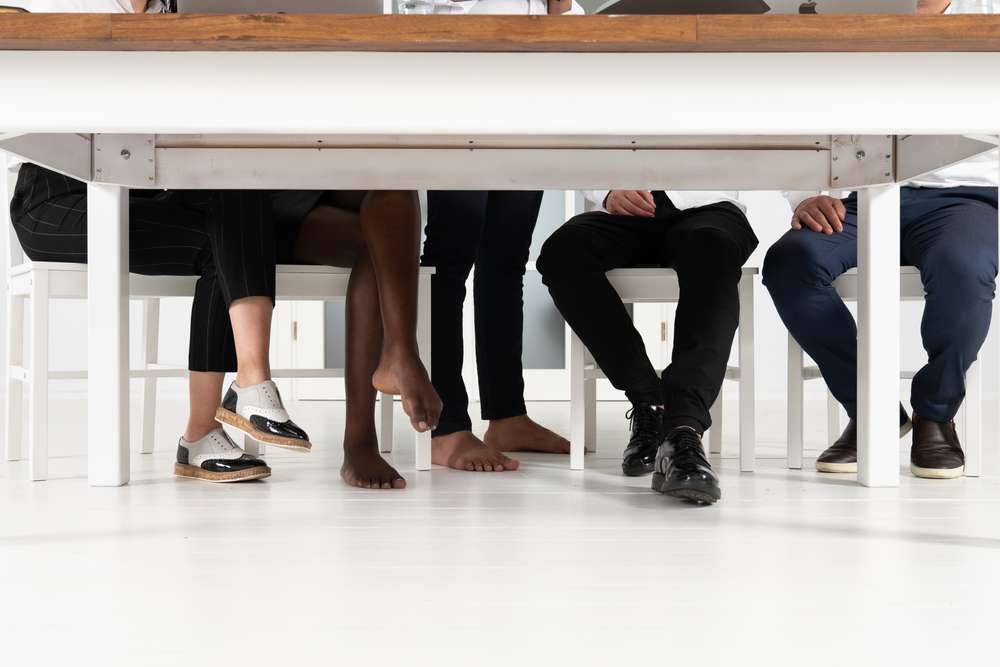
Staff focus on the top of the boardroom table, the place where laptops and notebooks sit. Office cleaners, however, are trained to look beneath the surface. From dried coffee drips that have run down the edge to the unsettling presence of discarded chewing gum, the undersides of shared tables are often a silent record of months of neglect.
These hidden surfaces are frequently touched by staff as they adjust their chairs or pull themselves closer to the table. Without a thorough cleaning checklist that includes under-surface wiping, these spots become active bacteria hotspots that bypass the standard daily tidy-up.
3. Light switches and thermostat controls
It is a curious quirk of human behaviour that we rarely stop to take a look at the things we touch every single day. Staff may notice a smudge on a window but won’t notice the grime accumulating on a light switch or the office touchpad of an office printer.
Because these items are touched by almost everyone, often immediately after they have entered the building from outside, they are primary vectors for infection control issues. A professional office cleaning service treats these small plastic components with the same level of importance as a toilet flush handle.
4. The “Lip” of the office dishwasher
In offices with a communal kitchen, staff often feel they are doing their bit by loading the dishwasher, a quicker alternative to handwashing dishes. However, office cleaners notice a specific area that staff always miss, the top “lip” and the rubber seal of the dishwasher door.
As plates are loaded, food debris and liquids can often splash onto the top edge of the door, an area that remains outside the wash cycle when the machine is closed. Over time, this creates a greasy, bacterial film. Part of how to keep your office clean involves addressing these spots that exist between the use of the appliance and its function.
5. Chair casters and base stars
Staff notice if their chair is comfortable, but they rarely look at the base or the wheels (casters). These areas collect a surprising amount of hair, carpet fibres, dust and tracked-in grit from the street.
Beyond the hygiene factor, this build-up can eventually seize the wheels, leading to floor damage and the need for premature replacement of furniture. A professional cleaner’s eye is trained to spot these low-level accumulations, ensuring that office cleaning costs per square foot remain an investment in asset protection, not just aesthetics.
6. The tops of door frames and exit signs
If you were to run a finger along the top of a door frame in a typical UK office, you would likely find a thick layer of grey felt-like dust. Because this is above eye level, staff, and even some amateur cleaners, never notice it.
Every time a door is slammed or even opened quickly, a small amount of this dust is dislodged and enters the breathing zone. For facilities managers, managing these high-level areas is a key part of indoor air quality management, it’s not just about having adequate ventilation. This is a primary reason why professional office cleaning is a benefit, as they cover the vertical and high-level surfaces that DIY efforts ignore.
7. Office partition fabrics and acoustic panels
Modern UK offices are filled with fabric-wrapped desk dividers and acoustic wall panels designed to dampen noise. While staff look at these as decorative or functional barriers, office cleaners see them for what they truly are: giant, vertical filters. Because these fabrics are static-charged by the office’s electronic environment, they actively pull dust, skin cells, and microscopic fibres out of the air.
Over time, these fabric dividers also absorb ambient odours, from lunch at the desk to damp coats. Cleaners notice that a stale office smell often lingers in the fabric even after the floors are scrubbed.
Including a vertical vacuum of acoustic panels in your cleaning checklist doesn’t just improve hygiene, it improves the sensory experience of the workspace. When the fabrics are clean, the office feels lighter.
The strategy behind cleanliness
For a facilities manager, the expertise a commercial cleaner provides is a valuable tool for reputation management. When guests or prospective employees visit, they might not consciously notice the clean door frames, but they will certainly sense a freshness that comes from a lack of hidden dust.
Calculating the value
When it comes to understanding the value, it’s not always going to be a direct financial saving, but more of a long-term process that results in better employee satisfaction, better efficiency and more fruitful business.
Having a truly clean office space is beneficial to employee morale and health. Employees value it when an employer takes care of them, and would naturally work with their best foot forward. Health-wise, no mess and harmful germs in an office means a reduced likelihood of injury or illness, meaning your office space isn’t at a reduced capacity.
Frequency recommendations
Determining how often should you clean your office depends on your specific layout. High-traffic areas and touchpoints need daily attention, while high-level door frames might only need a monthly reach-and-clean. When working with a commercial cleaner like Sentrex, we optimise cleaning frequencies best suited for your space, operating hours, and needs.
A professional cleaning checklist for overlooked areas
To help your team or current contractor improve their standards, consider adding these items to your monthly cleaning audit:
| Overlooked Spot | Why clean here? | Recommended action |
| Monitor vents | Dust traps can overheat the hardware | Monthly vacuum with soft brush attachment |
| Internal glass partitions | Fingerprints at push height can harbour germs if left. | Daily spot-clean with microfiber cloth & glass cleaner. |
| Underneath desks | Accumulates cobwebs and grit | Monthly low-level wipe-down |
| Tall door frames | Often missed in high-level dusting | Bi-monthly damp wipe |
| Fabric dividers | They absorb odours and dust | Quarterly deep extraction clean |
| The kettle base | Spilled water creates limescale/mould | Weekly descaling and wipe |
Conclusion: Seeing the unseen mess

The difference between a standard office and an exceptional one lies in the details that staff miss. By focusing on the areas, you can transform your office from a space that looks tidy into a sanctuary of health and productivity.
Professional cleaners aren’t just there to empty bins, they are there to manage the invisible environment. When you invest in a team that sees what your staff miss, you are investing in the long-term success of your business.
Is your current cleaning service looking deep enough? Don’t wait for dust to become a health issue or grime to damage your furniture. Contact us today for a comprehensive site audit or a bespoke quote based on how much does office cleaning cost for your specific square footage. Let us show you the difference that professional eyes can make to your workspace.


