
In the highly competitive UK fitness market, member retention is the lifeblood of any successful facility. While gym owners often focus on the latest equipment, high-octane classes, or tiered membership pricing, there is a quieter, more pervasive factor that determines whether a member renews their subscription: gym cleanliness.
Recent industry insights suggest that hygiene is a top-three priority for gym-goers, often ranking higher than the range of weights or the availability of personal trainers. When a facility feels neglected, members don’t just complain; they experience a visceral repulsion that leads directly to member churn.
In the post-pandemic era, the standard for what is considered acceptable has shifted permanently. If your facility fails to meet these elevated facility cleaning standards, you are essentially handing your competitors your most loyal customers.
Understanding the psychology behind why members leave and identifying the specific failures in gym hygiene is essential for any manager looking to protect their revenue and reputation.
The psychology of why cleanliness equals value

To a member, a clean gym is a safe gym. When a person pays for a monthly membership, they are not just paying for access to a treadmill, they are paying for an environment where they can improve their health. If that environment feels unhygienic, the perceived value of the membership plummets.
The “Ick” factor and member trust
Members often experience what psychologists call the “ick factor” – a sudden, sharp realisation that a space is unsanitary. It might be the smell of stale sweat in a spinning studio, a sticky handle on a chest press machine, or a clump of hair in the shower drain. Once a member experiences this, their trust in the brand is compromised.
They begin to notice other hidden dangers, wondering if the commercial cleaning is being managed professionally or if the facility is cutting corners.
Perception of professionalism
Visible neglect in hygiene suggests a lack of management oversight. If a member sees that the floor cleaning in leisure centres is being ignored, they assume that equipment maintenance and health and safety protocols are also being neglected. This perception of poor leadership is a primary driver of membership cancellations.
4 Major cleanliness failings that drive members away
While every gym is different, the reasons for hygiene-related churn usually fall into four key categories. Addressing these failings is the first step in an effective leisure cleaning strategy.
1. The old sweat odour and poor ventilation
One of the most immediate turn-offs is the smell. In high-intensity areas, sweat can soak into rubber matting and upholstery. If these aren’t treated with the correct enzymatic cleaners, the bacteria continue to grow, creating a persistent, sour odour. This is often exacerbated by poor ventilation, which traps moisture and pathogens in the air.
2. Grimy changing rooms and showers
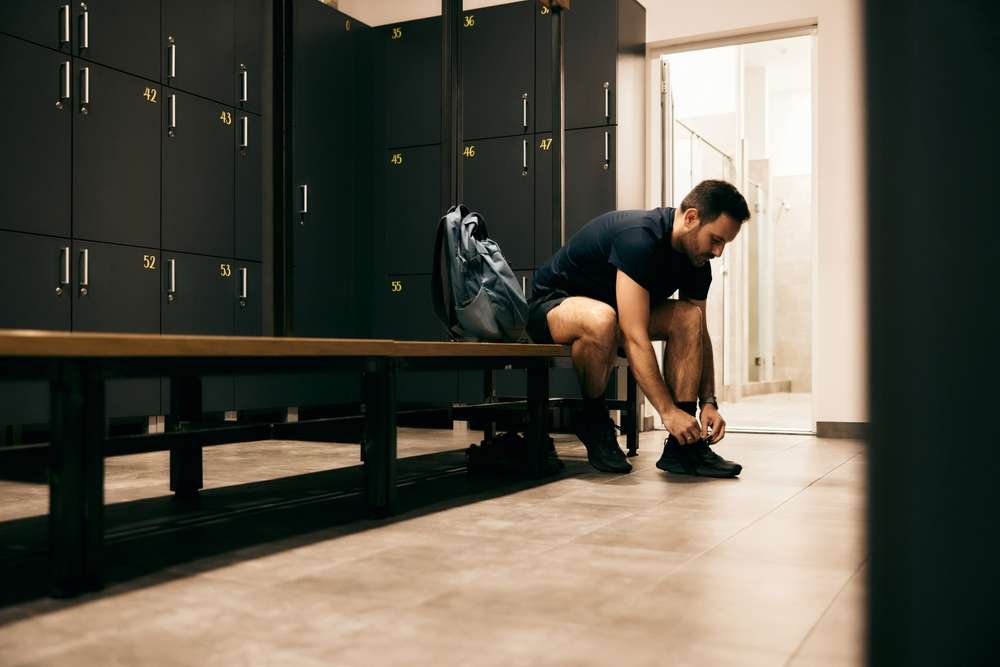
The changing room is where members feel most vulnerable. If the floors are constantly wet, the grout is discoloured, or the benches feel tacky, members will avoid using the facilities altogether. Persistent dampness leads to locker room bacteria and fungal growth, posing a genuine health risk. This is often cited in exit surveys as a deal-breaker for members.
3. Sticky or greasy equipment
There is nothing more off-putting than sitting down at a machine only to find the previous user’s sweat still on the seat. While many gyms provide wipes for members, relying solely on them is a mistake. Professional gym cleanliness requires a scheduled, deep-disinfection routine that covers every adjustment pin, handle, and screen.
4. Visible neglect in high-footfall areas
Entrance mats that are saturated with mud, dusty skirting boards, and finger-marked mirrors all contribute to a feeling of fading quality. To understand how these small details add up, explore the untold truth about high-footfall areas.
The hidden dangers: health, safety, and compliance
Beyond the threat of losing members, poor hygiene carries significant legal and operational risks. Every UK gym must ensure its leisure facilities are meeting UK hygiene safety standards.
Infection control and member safety
Gyms are hotspots for the transmission of skin infections and respiratory viruses. If your facility is linked to an outbreak of something as minor as Athlete’s foot or as serious as a staph infection, the reputational damage can be permanent. Understanding the hidden dangers of poor cleaning in gyms and leisure centres is vital for any operations manager.
Preventing slips and falls
Hygiene and safety are inextricably linked. A build-up of body oils, spilled sports drinks, or excess cleaning chemicals on a tiled floor can create a serious slip hazard. A professional gym hygiene protocol ensures that floors are not just clean, but safe and slip-resistant.
A prioritised gym cleaning checklist
To stop the exit of members, you need a proactive, multi-layered approach. Use this checklist to audit your current provision:
Daily high-impact tasks
- Hourly touchpoint wipes: Handles, buttons, and weight plates.
- Continuous washroom checks: Ensuring floors are dry and soap is replenished.
- Studio reset: Disinfecting mats and equipment after every group class.
Weekly maintenance
- Floor deep scrub: Using a rotary scrubber to remove ingrained grime from rubber matting.
- Ventilation hygiene: Cleaning fans and air vents to ensure fresh air flow.
- Upholstery treatment: Inspecting and sanitising all bench pads for cracks and bacteria.
Monthly & termly deep cleaning
Scheduled deep cleaning for pools, saunas, and changing rooms is non-negotiable. This involves removing lime-scale, treating grout, and fogging large areas with hospital-grade disinfectants.
Choosing the right partner: Commercial cleaning services
Many gyms try to handle cleaning with a front-of-house staff model. While instructors can help with quick wipes, they are not professional cleaners. They lack the training in COSHH (Control of Substances Hazardous to Health) and the specialised equipment needed for a true deep clean schedule.
Why professionalism matters
When you hire a professional team, you are investing in accountability. You should look for partners who can prove their standards through accreditations, such as SafeContractor or ISO 9001. A professional service provides:
- Auditable standards: Daily logs and monthly hygiene audits.
- Specialised chemicals: Enzymatic cleaners that actually kill the bacteria causing the ‘gym smell.’
- Reliability: No missed shifts due to staff sickness, ensuring the gym is always ready for the morning rush.
At Sentrex, we understand that every facility has a different budget. We provide transparent pricing and tailored plans. You can learn more about us and our commitment to leisure hygiene on our dedicated pages.
Measuring success: How cleaning reduces churn
To justify the investment in a higher standard of cleaning, managers should track specific metrics:
- Member surveys: Ask specifically about hygiene in your quarterly Net Promoter Score (NPS) surveys.
- Review sentiment: Monitor Google and social media reviews for keywords like clean, smell, or dirty.
- Attrition data: Analyse whether members who leave cite “facilities” as a reason in their exit interviews.
When cleanliness improves, these metrics typically follow suit. A cleaner gym is a more premium gym, allowing you to maintain your price point and increase member lifetime value.
Conclusion: don’t let dirt be your downfall
The shocking truth is that a single dirty shower block or a dusty studio can undo thousands of pounds spent on marketing and equipment. Your members are looking for an environment that supports their health, not one that threatens it.
By implementing a rigorous cleaning checklist, investing in commercial cleaning services, and prioritising gym hygiene, you can stop member churn in its tracks. A clean gym isn’t just a standard, it is an indication that a gym takes pride in its facility, and cares for the health of its members beyond a workout.
Is your facility losing members to a cleaner competitor? Don’t wait for your membership numbers to drop further. Contact us at Sentrex today for a comprehensive site audit or a bespoke quote for our leisure cleaning services. Let us help you create an environment that your members are proud to train in.


