
Environmental, Social, and Governance (ESG) criteria have moved from the periphery of corporate strategy to the very heart of how British businesses operate. For companies across the UK, solar energy is a cornerstone of the ‘Environmental’ pillar, providing a simple way to reduce carbon emissions and demonstrate a commitment to renewable energy.
However, simply installing photovoltaic (PV) modules is not enough to satisfy rigorous ESG reporting. If your system is underperforming due to dirty solar panels, your sustainability metrics are based on a fallacy.
The reality of commercial energy management is that “soiling”—(the accumulation of dust, soot, bird fouling, and industrial pollutants)—is a primary driver of solar panel efficiency loss. Without a robust maintenance strategy, the environmental benefits you report to stakeholders may be vastly overstated.
Today, the Sentrex team presents our latest guide exploring how professional solar cleaning is not just a maintenance task, but a critical component of commercial ESG compliance.
The Environmental aspect: Maximising carbon displacement
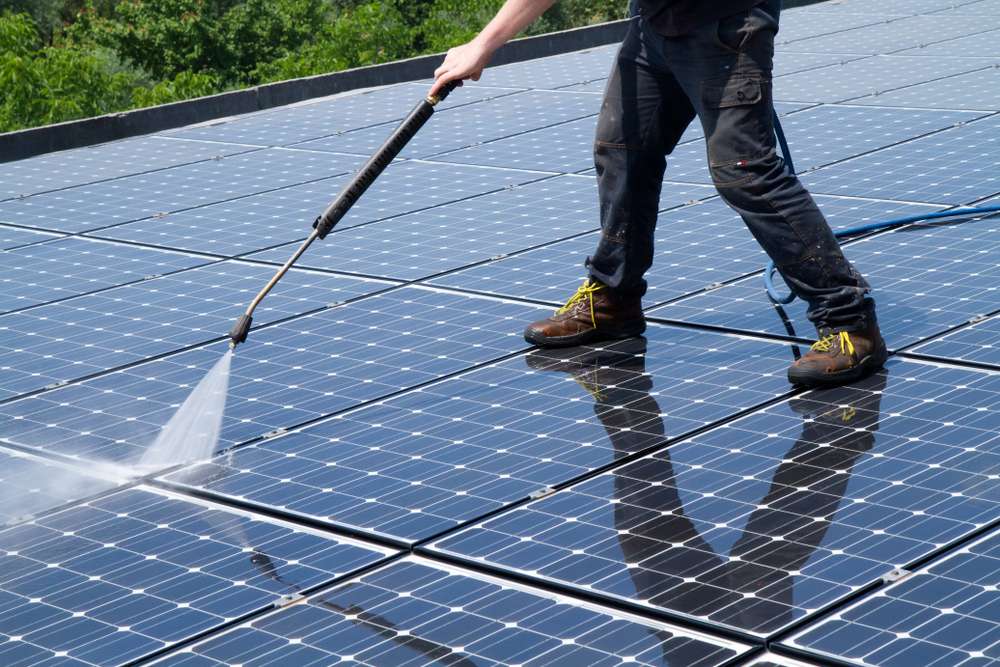
At the core of the ‘E’ in ESG is carbon reduction. Companies invest in solar arrays to displace energy that would otherwise be sourced from the fossil-fuel-heavy National Grid. However, when panels are neglected, the displacement is diminished.
Combating soiling losses
In industrialised areas of the UK, dirty solar panels can experience soiling losses of up to 25% or more. If your ESG report claims a carbon offset based on the theoretical maximum output of your system, but your panels are only operating at 75% capacity due to grime, your data is inaccurate.
Professional maintenance ensures that every available photon is converted into clean energy, allowing you to report carbon displacement figures with total confidence.
For many businesses, this level of attention to detail is integrated into their broader industrial cleaning and facility management protocols. By ensuring panels are clear, you are fulfilling the “Environmental” promise made to your investors and customers.
The Governance aspect: Accountability and risk management
The ‘G’ in ESG focuses on how a company is governed, including its approach to risk management, transparency, and the protection of assets. Neglecting solar infrastructure introduces significant operational risks that can undermine governance scores.
Protecting Hardware and PV Warranty Compliance
One of the most significant governance risks is the premature failure of expensive assets. As discussed in our analysis of 7 reasons your solar panels need cleaning more often, neglected dirt can lead to panel hotspots. These occur when localised shading causes a cell to overheat, potentially leading to fire or permanent module failure.
From a governance perspective, failing to maintain these systems can be seen as poor asset management. Most manufacturers also require proof of regular solar panel maintenance to keep the PV warranty valid. If a system fails and the warranty is voided due to neglect, it represents a failure in corporate oversight.
Ensuring safety and compliance
Governance also encompasses health and safety. Commercial solar arrays are often located in high-access areas or integrated into complex roofing systems. Relying on untrained staff for DIY cleaning is a massive liability.
Working with professional solar cleaners ensures that all work is carried out according to HSE standards, using the correct access equipment and safety protocols. This is a standard requirement in highly regulated sectors, such as those requiring medical cleaning or specialist technical maintenance.
Improving ROI: The financial side of ESG
While ESG is often viewed through the lens of ethics, it is fundamentally about long-term financial sustainability. The ROI solar cleaning provides is one of the most straightforward calculations in facilities management.
Understanding the potential financial benefits
Consider a medium-sized commercial array (100kW). In the UK, a 20% efficiency loss due to dirt can cost the business over £3,000 per year in lost energy savings and export payments. The cost of a professional clean is a fraction of this amount. By investing in maintenance, businesses:
- Reduce their reliance on expensive grid energy.
- Protect the capital investment of the solar hardware.
- Avoid the massive costs of replacing modules damaged by hotspots or solar panel degradation.
This fiscal responsibility is often part of a wider facilities management contract, where the objective is to lower the total cost of ownership for the building’s infrastructure.
Social responsibility: Setting the standard
The ‘Social’ aspect of ESG involves how a company manages relationships with employees, suppliers, and the communities in which it operates. A well-maintained, gleaming solar array is a visible sign of a company’s values.
Leading by example
A dirty solar array, visible to the public or employees, suggests a “box-ticking” exercise rather than a genuine commitment to green energy. Conversely, a pristine system shows that the business values its sustainable initiatives. Just as window cleaning and grounds maintenance contribute to a positive local environment, clean solar panels demonstrate that a business takes pride in its ecological footprint.
Integrating solar cleaning into specialist cleaning routines
Commercial properties often have unique cleaning requirements. A site might require commercial cleaning for its offices and specialist cleaning for its production lines. Solar maintenance should be viewed with the same level of technical necessity. This is why opting for a professional cleaning service is far more beneficial than having a go yourself.
It’s more than just water and a sponge.
Professionals do not simply use a hose and a sponge. To comply with ESG-level asset protection, deionised water systems must be used. Standard tap water contains minerals that can leave limescale deposits on the glass, which can actually worsen solar panel efficiency loss over time.
By using a professional service like Sentrex, we use pure water and soft-bristled brushes, we ensure that the panels are not just clean, but protected from chemical damage and abrasion.
Creating a data-driven maintenance schedule
To satisfy ESG auditors, businesses need more than just a clean roof; they need data. A professional cleaning partner can provide:
- Before-and-after performance logs: Demonstrating the immediate uplift in energy yield.
- Visual inspection reports: Identifying potential cracks, loose wiring, or lichen growth before they become critical.
- Documented service history: Providing the “paper trail” required for manufacturer warranties and ESG audits.
If you are wondering where to find these experts, you can search for solar panel cleaning services near you to ensure you are working with a team that holds the correct accreditations like Sentrex.
Common questions regarding commercial solar maintenance
Does the rain not clean the panels for free?
In the UK, rain often contains particulates. While it may wash away loose dust, it cannot remove sticky bird fouling, tree sap, or heavy traffic film. In fact, light rain often turns dust into a “muddy” film that further obscures the cells.
How often should commercial panels be cleaned?
For most UK businesses, twice a year is the standard for ESG compliance. However, sites near coastal areas (salt spray) or heavy industry (soot and chemicals) may require more frequent attention.
Is professional cleaning worth the cost?
Yes. The uplift in energy generation almost always exceeds the cost of the service, particularly for large-scale arrays where the cumulative loss of efficiency is high.
Conclusion: Clean energy requires clean technology
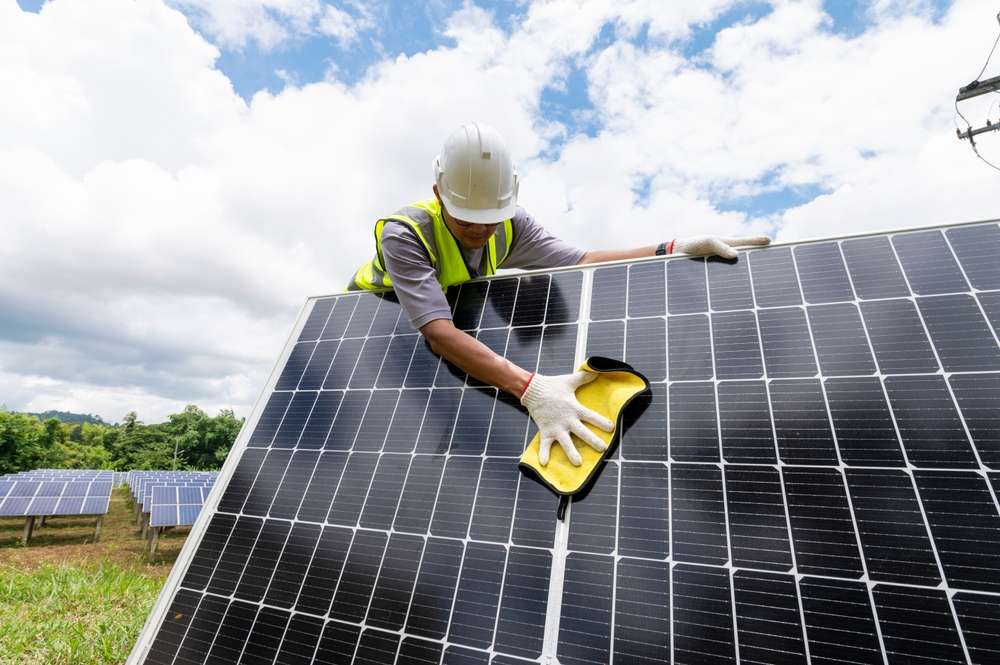
ESG compliance is about more than just a certificate on a wall; it is about the measurable, transparent, and responsible management of a company’s impact on the world. If your business relies on solar energy to meet its environmental targets, ensuring those panels are free from grime is a fundamental requirement.
By addressing the issues of dirty solar panels, you aren’t just improving your energy yield—you are protecting your assets, ensuring safety, and proving to your stakeholders that your commitment to a greener future is authentic.
Is your commercial solar array working at its full potential? At Sentrex, we provide the specialist expertise needed to maintain your renewable energy infrastructure. Learn more about us and our range of services, or contact us today to schedule a professional assessment of your system’s cleanliness and efficiency.


