
Investing in solar energy is one of the smartest financial and environmental decisions a homeowner or business manager can make. However, a common misconception among UK property owners is that our frequent British rain is sufficient to keep solar panels operating at peak performance.
Just like rain won’t wash your car, it also does not scrub your solar panels. Over time, a buildup of environmental debris can quietly erode your energy saving efforts, and return on investment. If you have noticed a dip in your energy generation figures, it might not be the weather—it may just well be the cleanliness of the glass.
In this guide, we at Sentrex will explore the 7 key reasons your solar panels need cleaning more often.
Are solar panels less effective when they are dirty?
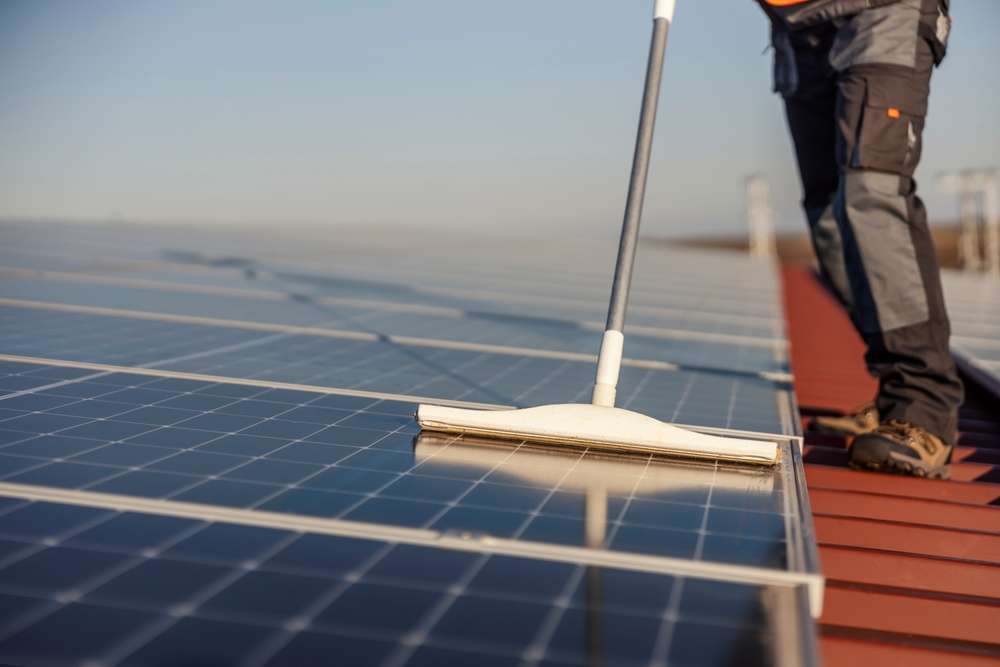
Depending on the scale of dirt, yes. Solar panel efficiency relies on the maximum amount of sunlight (photons) penetrating the glass to reach the solar cells beneath. Any obstruction on the surface acts as a filter, scattering light and reducing the energy output.
How much can dirt affect solar panel efficiency?
Research and field data suggest that dirty solar panels can lose between 5% and 25% of their efficiency, depending on the severity of the soiling. There’s a cost for not cleaning, if your system is underperforming by 15% due to grime, you are effectively throwing away 15% of your potential savings.
With that being said, let us show you the 7 environmental reasons your solar panels need cleaning more often:
Reason 1: Bird droppings
A surprisingly aggressive enemies of solar panel production are bird droppings. Unlike general dust, which creates a uniform layer of shading, bird droppings create a “hard shading.” This is particularly problematic for string inverter systems, where the performance of an entire string of panels can be dragged down by the obstruction on a single cell.
Furthermore, bird droppings are acidic. If left to bake in the sun, they can etch the glass surface or cause “hotspots”—areas where the blocked current generates heat, potentially burning out the cell and permanently damaging the panel. If you live in a coastal area or near trees, this is a primary reason to schedule a solar panel wash more frequently.
Reason 2: Air quality in your area
Air quality plays a significant role in how often your system requires attention. If your property is located near a busy A-road, motorway, or under a flight path, your panels are subjected to exhaust fumes and airborne particulates that contain oil.
This oily residue, known as traffic film, creates a sticky surface on the glass. Ordinary dust then adheres to this film, creating a layer of grime that rainwater cannot shift. For businesses located in industrial estates, the accumulation of industrial fallout can be even more rapid.
Our teams often see this when performing industrial cleaning services; the roofs and panels in these zones degrade in performance much faster than those in rural settings without regular intervention.
Reason 3: Agricultural dust and pollen seasons
While rural living offers fresher air, it presents unique challenges for solar panel maintenance. During the spring and summer, the UK experiences high pollen counts. Pollen is naturally sticky and can coat panels in a stubborn yellow film in a matter of days.
Additionally, harvesting season kicks up vast amounts of dust and organic debris. If you are located near farmland, this particulate matter settles on your array, significantly blocking sunlight.
We often coordinate grounds maintenance schedules with panel cleaning to ensure that once the grass is cut and the hedges trimmed, the dust kicked up during the process is promptly washed away from your energy systems.
Reason 4: Low tilt angles and flat roofs
The angle of your solar panels dictates how “self-cleaning” they can potentially be. Panels installed on a steep pitch allow water to run off quickly, carrying some loose dirt with it. However, this won’t be as apparent on flat roofs with a shallow tilt (often 10 to 15 degrees).
On these flatter set-ups, water tends to pool along the bottom edge of the frame. As the water evaporates, it leaves behind a band of dirt and limescale. Over time, this band creeps up the panel, shading the bottom row of cells and causing significant solar performance loss. If you have a flat-roof, your solar cleaning frequency should inherently be higher than that of a pitched-roof system.
Reason 5: Organic growths
In the damp UK climate, organic growth is a persistent issue. Lichen and algae thrive in moisture and can take hold in the microscopic crevices of the glass or along the frame seals. Unlike dust, lichen actively bonds to the surface. It creates a shaded spot that is impossible to remove with a simple hose down.
Once lichen establishes itself, it spreads. Professional cleaning using pure water and specialised brushes is usually the only way to safely remove these organisms without scratching the anti-reflective coating on the glass. This level of detailing is similar to the precision we apply in our specialist cleaning division, ensuring stubborn contaminants are removed without damage.
Reason 6: Construction work
Is there a loft conversion happening down the street? Or a new housing development is being built nearby? Construction sites generate massive amounts of silica dust, sawdust, and cement particles. This fine dust can travel significant distances and settle on your roof.
Cement dust is particularly dangerous; if it gets wet and cures on your panels, it can be nearly impossible to remove without specialist chemicals. If you notice construction cranes or scaffolding in your neighbourhood, keep a close eye on your generation meter.
Reason 7: Rain isn’t the ‘fix’
Perhaps the most pervasive reason panels stay dirty is the belief that rain cleans them. While a heavy downpour can wash away some loose dust, it cannot cut through traffic film, bird droppings, or sticky pollen. In fact, light rain can make matters worse by mixing with the dust to create “mud spots” that dry onto the glass.
To maintain optimal solar panel efficiency, mechanical agitation (scrubbing with a soft brush) and rinsing with pure water are required. This ensures the glass is left spotless and free of residue.
DIY vs Professional Solar Panel Cleaning: Making the Right Choice
Once you accept that your panels need cleaning, the next question is how to go about it. While the DIY route may seem cost-effective initially, it carries risks that can outweigh the savings.
Safety and warranty considerations
Solar panels are electrical appliances located at height. The risk of falls is significant, and accessing a roof without proper scaffolding or harness systems is dangerous. Furthermore, using the wrong water source—such as tap water—can leave calcium deposits (limescale) on the panels, which permanently reduces output.
Most manufacturers recommend cleaning with deionised or reverse-osmosis filtered water. Using harsh chemicals or abrasive sponges can strip the anti-reflective coating and void your warranty.
Professional cleaners use water-fed pole systems that allow them to clean panels safely from the ground or a secure platform. They use purified water that dries without spots, ensuring maximum light transmission.
Are there cleaning services that professionally clean solar panels?
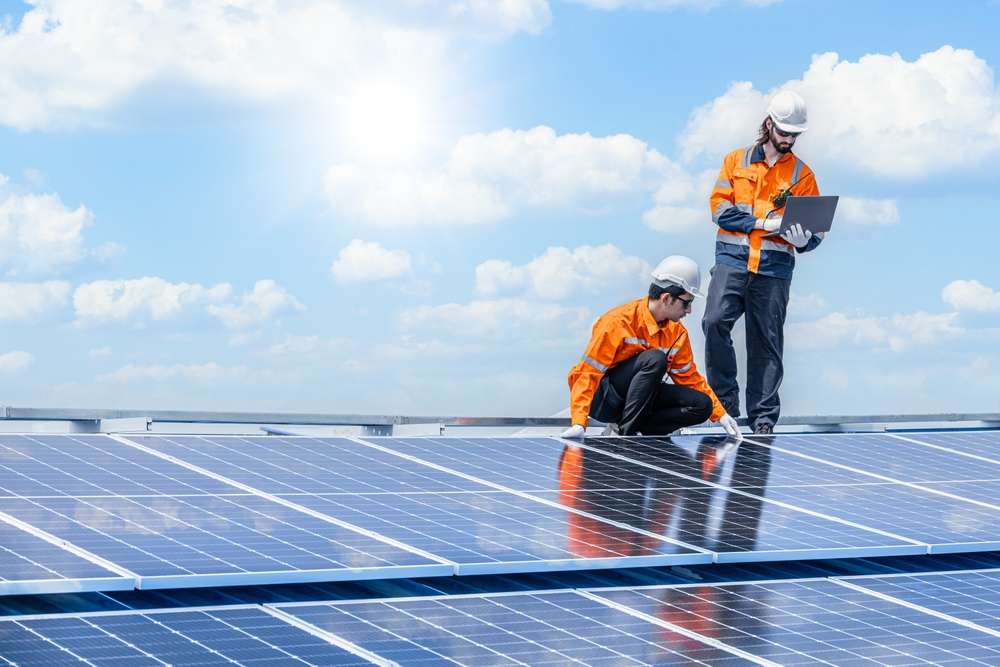
Absolutely, at Sentrex, we apply the same rigorous standards to solar maintenance as we do to our medical cleaning services. Just as a sterile environment requires precise protocols, maintaining the delicate surface of a PV module requires specific techniques to avoid micro-scratches.
We pride ourselves on transparency, safety, and results. You can learn more about us and view our accreditations to see why we are a trusted partner for property maintenance across the UK.
Would you like us to provide a free estimate for cleaning your solar array and restoring your energy output?


