
GP surgeries are a hub for healing. On a daily basis, many people visit a GP surgery for a number of problems. Due to the sheer number of people and health issues that frequent the surgery, it’s clear that robust cleaning measures need to take place, but when is the best time to do it? Day or night?
In this blog, we will discuss night vs. Daytime cleaning for GP surgeries – Which is better?
Sentrex Services stands as a leading provider of comprehensive cleaning and hygiene solutions, serving a vast region from the Northwest to the Southeast of England. With a dedicated team of over 600 professionals, we deliver bespoke cleaning services tailored to the unique needs of each commercial client.
Are there legal requirements for cleanliness at a GP surgery?

Yes. The legal requirements for cleanliness in a GP surgery in the UK are stringent and are primarily enforced by the Care Quality Commission (CQC). They are not simply a matter of a visually tidy environment but are a structured and auditable process designed to prevent infection and ensure patient safety.
Key legal framework
- Health and Social Care Act 2008 (Regulated Activities) Regulations 2014: This is the main piece of legislation. Specifically, Regulation 12 mandates that all premises and equipment must be “clean, secure, suitable and used properly,” with hygiene standards appropriate for their use.
- National Standards of Healthcare Cleanliness: This official document provides the detailed, practical framework for meeting the legal requirements. It sets the benchmark for all NHS and private healthcare facilities, including GP surgeries.
Core standards and procedures
- Risk-based cleaning: Every area of the surgery must be assigned a “Functional Risk” (FR) category. For example, clinical rooms are a high-risk area requiring frequent and thorough cleaning, while an administrative office is a lower risk. This risk assessment dictates cleaning schedules and methods.
- Colour-coding: A strict colour-coding system for all cleaning equipment (e.g., mops, cloths, buckets) is a mandatory requirement to prevent cross-contamination between different areas like toilets, clinical spaces, and kitchens.
- Commitment to cleanliness: Surgeries must display a “Commitment to Cleanliness” charter for patients to see. This charter includes the surgery’s star-rating for cleanliness, which is based on regular audits, fostering transparency and accountability.
Demonstrating compliance
To prove they are meeting these legal requirements, surgeries must be able to provide evidence to the CQC. This includes:
- Policies and Training: Having clear, written policies for infection control and ensuring all staff, including cleaners, are properly trained in these procedures.
- Audits and Record-Keeping: Conducting regular, documented audits of cleaning standards and methods. This proves that the cleaning schedule is being followed and is effective.
- Waste Management: Maintaining a safe and correct process for segregating, storing, and disposing of both clinical and non-clinical waste.
Is it better to clean during the day or night at a GP surgery?
Due to the amount of people that visit a GP surgery daily, and the various types of issues they visit for (some of which may have an infectious illness) it is paramount to always keep a GP surgery clean.
However, it is not realistic to conduct a deep clean during operating hours, in terms of ease and convenience, a deeper clean would be more suitable to conduct after operating hours (in the night). Whilst a simple wipedown of surfaces etc can easily be done during the day.
Here is a more detailed look at night cleaning for a GP surgery:
Night cleaning – The benefits
Cleaning at night or in the early morning before the surgery opens offers significant advantages in terms of infection control, safety, and thoroughness.
- Minimises infection risk: The primary goal of cleaning in a healthcare setting is to prevent the spread of infection. Cleaning while patients and staff are not present eliminates the risk of disturbing dust and pathogens, which could become airborne and settle on clean surfaces.
- Thorough disinfection: An empty building allows cleaners unrestricted access to all areas, including high-touch surfaces like door handles, reception desks, and examination rooms. They can use industrial-grade disinfectants and other chemicals that may require a specific “dwell time” to be effective, which is not possible during operating hours.
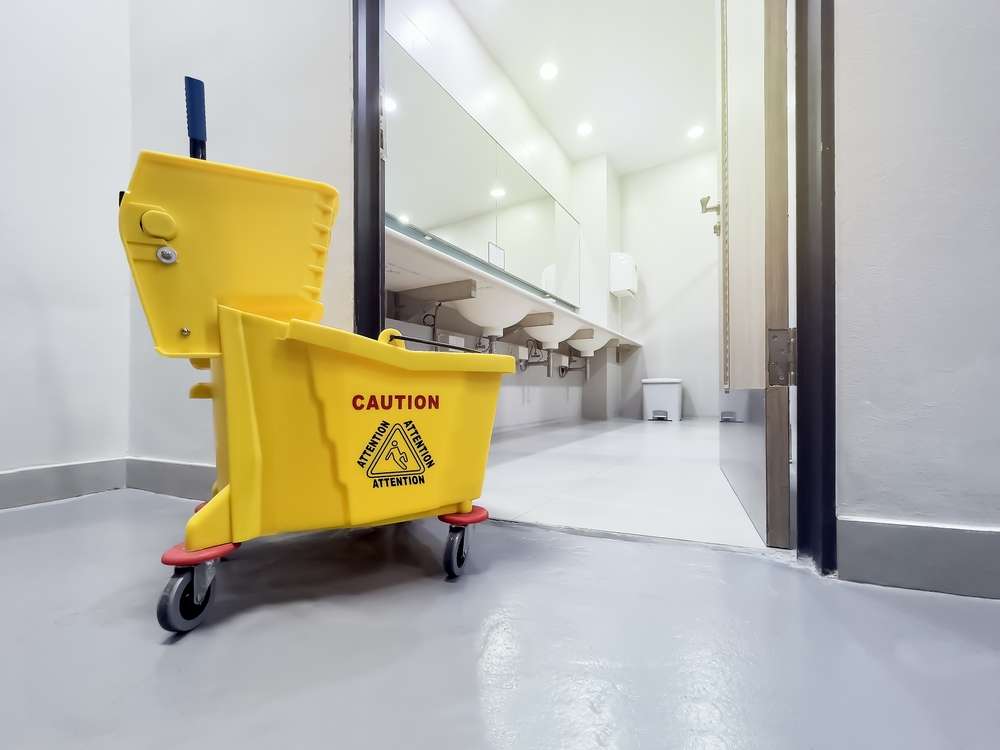
- Enhanced safety: Cleaning can pose hazards like wet floors and trailing cords. Performing these tasks at night removes the risk of patients, staff, or visitors slipping, tripping, or coming into contact with cleaning chemicals.
- Optimal for deep cleaning: Tasks like stripping and polishing floors, or deep-cleaning sanitary ware, require time and space that are not available during the day. An out-of-hours schedule allows for these more intensive cleaning routines, which are essential for maintaining hygiene standards.
- Increased productivity: Cleaning staff can work more efficiently without interruptions from people, foot traffic, or daily activities. This allows them to focus on a methodical, top-to-bottom cleaning process.
What kind of cleaning can be done at daytime?
While the main clean happens at night, healthcare cleanliness standards require some level of cleaning and maintenance to be carried out throughout the day. This is often handled by a designated staff member.
- Touchpoint Cleaning: The day porter’s main responsibility is to clean and disinfect “touchpoints”—frequently touched surfaces—such as door handles, handrails, light switches, and reception counters.
- Spillage response: They are on hand to immediately clean up any spills of bodily fluids or other substances, which is critical for infection control.
- Waste management: They ensure bins are emptied regularly, especially in clinical areas and waiting rooms.
- Maintaining high-traffic areas: They perform spot-cleaning in high-traffic areas like waiting rooms and toilets to keep them presentable and hygienic.
High-traffic areas like waiting rooms, reception areas, and toilets can quickly become messy and unhygienic throughout the day. Daytime cleaning ensures these areas are consistently tidy and presentable.
This not only helps maintain hygiene, but also helps to improve the patient experience and perception of the surgery as a result of its cleanliness, which gives the visitor a sense of comfort.
Do visitors need to follow cleanliness protocols?
In most cases, despite the aftermath of COVID-19 visitors aren’t forced to comply with things such as wearing masks, maintaining social distances, and using hand sanitizer. However, there is nothing wrong with visitors following these protocols by themselves.
Optimal and bespoke cleaning services for GP surgeries
Sentrex Services stands as a leading provider of comprehensive cleaning and hygiene solutions, serving a vast region from the Northwest to the Southeast of England. With a dedicated team of over 600 professionals, we deliver bespoke cleaning services tailored to the unique needs of each commercial client.
At Sentrex, we prioritise commercial, industrial, and specialist cleaning services. Our services aren’t just a standard once-over, we ensure a comprehensive and individually tailored approach perfect for any site.
Here is a list of the cleaning services we provide:
- Chemical degreasing
- Steam cleaning
- Pressure washing
- Power-scrubbing
- Auto-scrubbing
- Stain and spill removal
- Debris and dust removal
- Power-scraping
- Sanding, and shot-blasting
- Vacuuming
- High-speed burnishing
- Spray buffing, waxing, and stripping
- Low moisture bonnet cleaning
- Deep extraction
- Commercial carpet cleaning
- Trash clean up
- Window cleaning
- Exterior cleaning
- Cleaning of washrooms
- Deep cleaning
In this blog, we’ve hoped to have helped you understand night vs daytime cleaning for GP surgeries – which is better? Whilst also providing supplementary information about the benefits of our professional services.
Our commitment to fair pricing, environmental sustainability, and personalised service sets us apart. We prioritise quality through rigorous control measures, including monthly audits with advanced software, real-time management via iPads, and an automated time and attendance system.
As members of esteemed trade bodies, we adhere to the highest industry standards. Beyond core cleaning, we offer a full suite of soft and hard FM services, ensuring comprehensive building maintenance. Want to know if our services apply to your business or site? Don’t hesitate to get in touch with us to secure a superior clean.


