Booths processes tonnes of meat daily beside Preston city centre. Dr. Oetker’s Leyland facility produces thousands of frozen pizzas hourly. Baxi manufactures heating systems at Bamber Bridge requiring contamination-free assembly. Preston’s 1,426 food manufacturing workers and engineering operations across Red Scar, Walton Summit, and Preston East cannot pause production for traditional cleaning. Sentrex delivers dry ice blasting working within operational constraints rather than creating them.


Food production defines Preston manufacturing. Booths’ meat processing facility operates adjacent to corporate offices requiring rigorous daily sanitation. Dr. Oetker’s frozen pizza production at Leyland maintains pharmaceutical-grade hygiene standards. Smaller producers throughout Roman Way Industrial Estate and Riversway Business Village near Preston Docks supply major retailers demanding BRC compliance without chemical-based cleaning.
These operations share common challenges. Production runs transition rapidly between products. Equipment must clean thoroughly without residue introduction. Validation procedures cannot accommodate traditional cleaning requiring extensive drying periods. Chemical-free methods become operational necessities rather than environmental preferences.
Baxi’s heating equipment manufacturing at Bamber Bridge combines precision metalworking with assembly operations. Welding, machining, and finishing processes generate contamination accumulating on production equipment. Continuous manufacturing schedules eliminate traditional cleaning windows requiring multi-day shutdowns.
Engineering operations at Leyland produce transport equipment demanding precision environments. Component specifications tolerate no contamination affecting dimensional accuracy or surface properties. Traditional cleaning methods risking either become operationally unacceptable.
Red Scar Business Park, Walton Summit, and Preston East Employment Area concentrate logistics supporting M6 and M65 connectivity. Distribution facilities coordinate regional supply chains operating continuously. Cleaning must work around 24-hour operations rather than dictating facility closure.
Consider food production realities. Booths processes different meat products requiring sanitation between batches. Traditional cleaners introduce chemical residues entering food streams. Validation procedures for chemical-based cleaning extend changeover times beyond operational acceptability. Water-based methods create moisture in facilities requiring dry conditions for food safety.
Dr. Oetker’s pizza ovens accumulate carbon at production temperatures. Traditional approaches require cool-down periods, manual scraping damaging oven interiors, and restart procedures consuming hours. Production schedules demanding rapid changeovers cannot accommodate these timescales. The cleaning method becomes the operational bottleneck.
Engineering operations face different complications. Baxi’s precision manufacturing accumulates process residues on assembly equipment. Traditional cleaning requires equipment dismantling, solvent application, thorough rinsing, complete drying, and reassembly. Multi-day procedures conflict fundamentally with continuous production schedules. Manufacturers choose between cleanliness and output—an impossible position.
Abrasive techniques destroy what they clean. Shot blasting alters surface properties affecting component performance. Wire brushing damages precision finishes. Modern manufacturing tolerances measured in microns prove incompatible with aggressive mechanical cleaning. The cure becomes worse than the condition.
Chemical disposal obligations grow continuously. Environmental regulations tighten. Waste streams require documentation and certified disposal. Residues demand removal before production restart. Preston manufacturers pursuing sustainability find traditional cleaning undermines environmental commitments whilst creating ongoing costs.
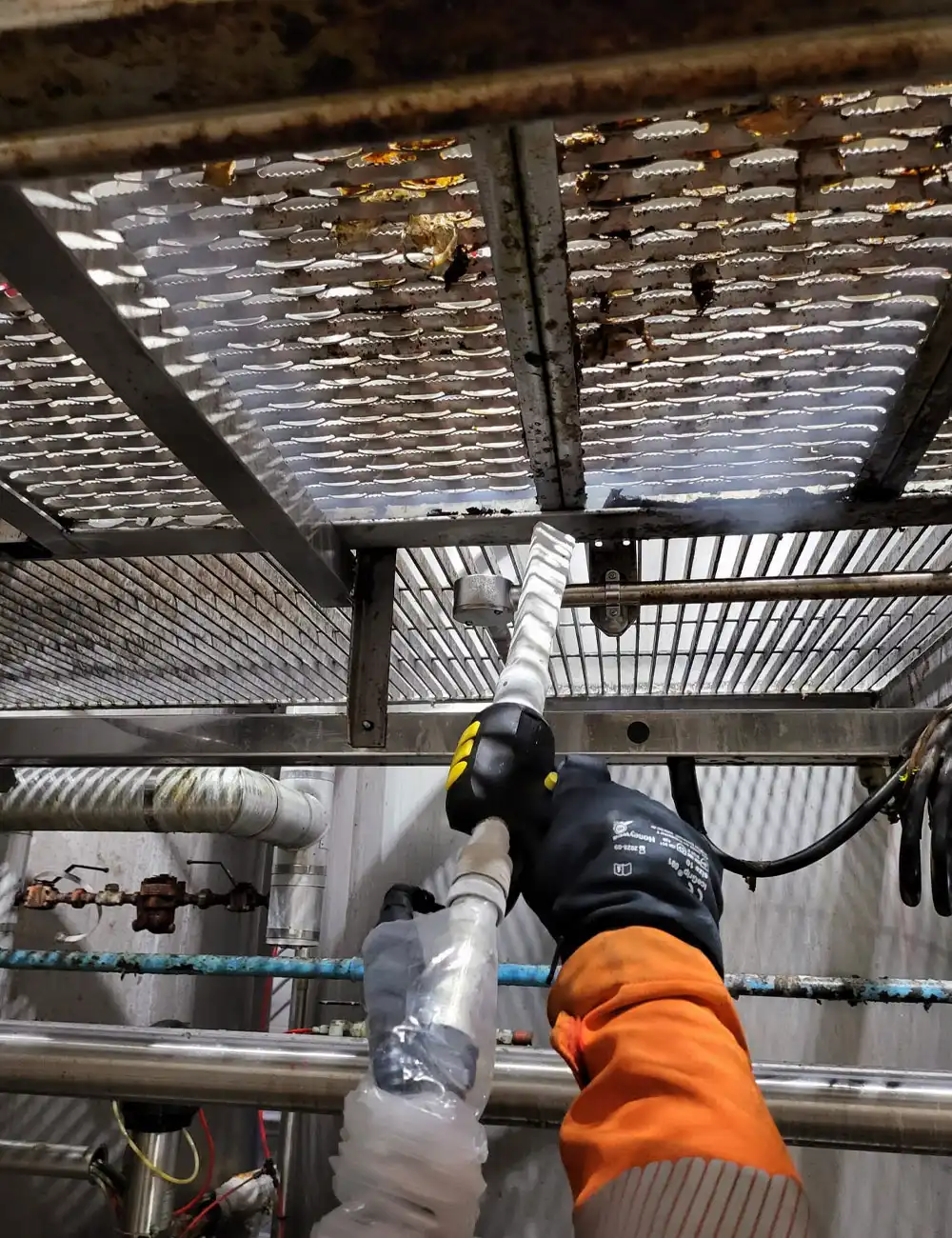
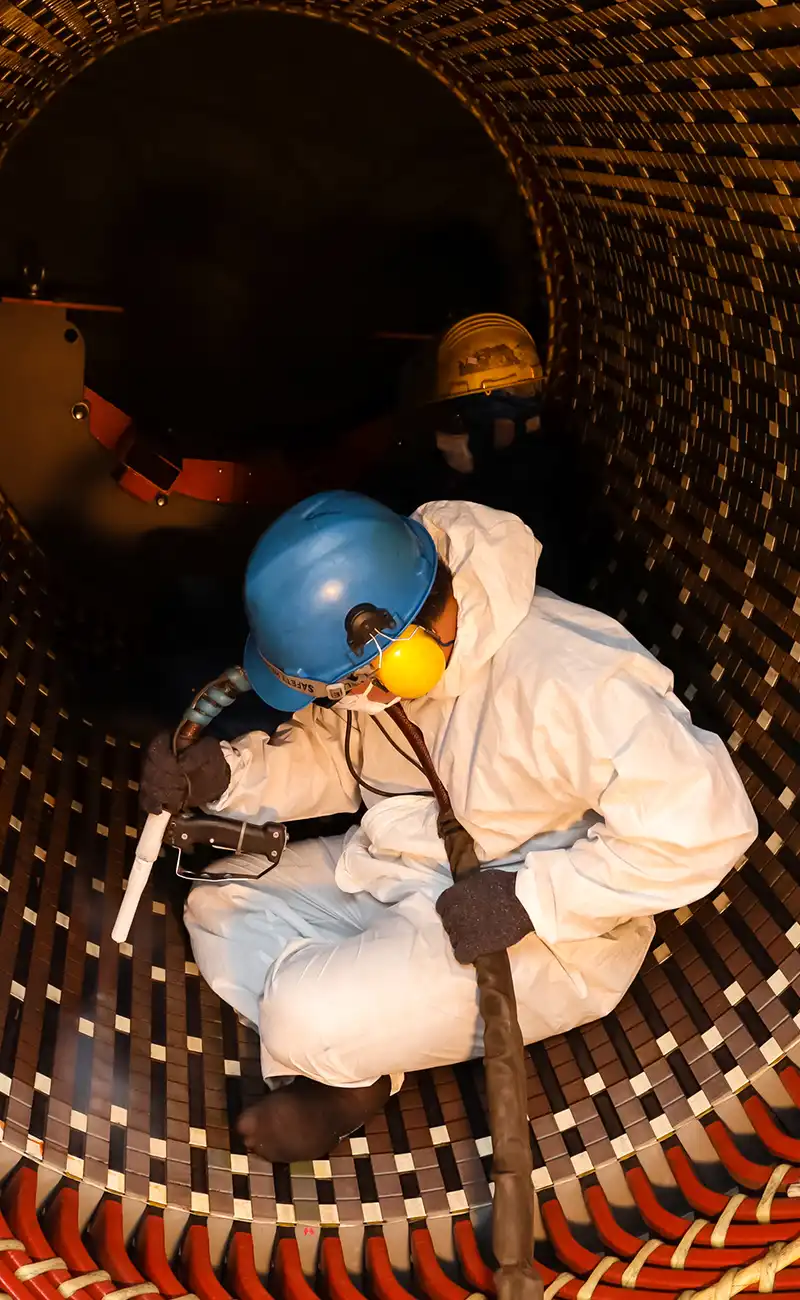
Dry ice technology changes operational equations fundamentally. Solid CO2 pellets strike contamination at controlled pressure. Thermal shock fractures deposits. Kinetic energy dislodges material. Simultaneously, pellets transition directly from solid to gas—sublimation physics eliminating liquid phase entirely. Contamination leaves. Cleaning medium vanishes. Nothing remains requiring removal, drying, or disposal.
This matters commercially across Preston’s diverse sectors. Booths sanitises equipment between meat products without chemical introduction. Changeover times reduce from hours to minutes. Dr. Oetker cleans ovens during brief production gaps rather than extended shutdowns. Output increases through reduced non-productive time. Baxi maintains assembly equipment without dismantling. Manufacturing continues whilst cleaning addresses specific problem areas.
Environmental calculations shift completely. The CO2 comes from industrial emissions already atmospheric—the process recovers rather than creates. No chemicals enter drainage systems. No contaminated water requires treatment. No waste streams demand disposal. Preston manufacturers receive sustainability progress through operational methods rather than theoretical commitments.
Financial impacts compound. Reduced downtime protects revenue. Eliminated waste disposal cuts recurring costs. Simplified procedures reduce labour requirements. Equipment life extends through gentler treatment. The technology justifies itself through operational improvements rather than requiring acceptance as necessary expense.
Booths’ meat processing operates under intense scrutiny. Production lines, cutting equipment, and packaging machinery require sanitation satisfying HSE workplace standards and industry regulations without residue introduction. Dry ice provides chemical-free sanitation with immediate equipment availability. Batch transitions accelerate supporting varied product schedules whilst regulatory compliance simplifies through eliminated validation complications.
Dr. Oetker’s frozen pizza production at Leyland maintains contamination-free manufacturing. Oven carbon accumulation traditionally required scraping damaging interior surfaces whilst generating airborne particles contaminating production areas. Dry ice removes deposits without surface damage. Cleaning occurs during natural production breaks rather than forcing dedicated shutdown periods. Facility utilisation increases through reduced downtime.
Smaller food producers throughout Roman Way and Riversway near Preston Docks satisfy major retailer requirements. Conveyor systems, mixing equipment, and packaging lines transition between products requiring thorough sanitation. Chemical-free cleaning eliminates residue concerns. Immediate surface drying prevents microbial growth in moisture-sensitive environments. Rapid changeovers support diverse product portfolios maximising facility value.
Baxi’s Bamber Bridge operations manage metalworking contamination from welding, machining, and assembly. Carbon deposits accumulate on fixtures and tooling. Oils and metal particles build on equipment surfaces. Traditional cleaning requires production cessation, equipment dismantling, solvent application, and reassembly. Dry ice removes contamination whilst equipment remains installed and operational. Manufacturing continues whilst cleaning maintains standards supporting quality systems.
Transport equipment production at Leyland demands precision environments. Component specifications tolerate minimal contamination. Surface properties affect functionality. Dimensional accuracy determines assembly success. Traditional cleaning methods risking either contamination or damage prove unacceptable. Dry ice provides effective sanitation supporting continuous precision manufacturing.
Engineering facilities across Preston’s industrial estates manage varied contamination types. Metal particles from machining operations. Cutting fluids and lubricants from manufacturing processes. Carbon deposits from welding activities. Each accumulates affecting equipment performance and product quality. Dry ice addresses these varied challenges through adjustable pressure settings, appropriate nozzle selection, and application techniques matching contamination characteristics.
Preston’s manufacturing diversity demands operational flexibility rather than standardised approaches. Food producers require rapid sanitation during minimal-staffing periods between production runs. Engineering facilities need cleaning coordinated around continuous operations without disrupting output. Logistics operations demand minimal interference with distribution schedules.
Technical configuration matters significantly. Food applications require lower pressures protecting equipment whilst achieving sanitation standards. Engineering operations tolerate higher pressures removing stubborn industrial contamination. Nozzle geometry determines coverage patterns and access to confined spaces within complex assemblies. Dry ice characteristics—pellet size and density—match contamination type and substrate sensitivity.
Project timing coordinates with production realities. Food manufacturers schedule cleaning during changeovers. Engineering operations integrate cleaning within planned maintenance windows. Logistics facilities utilise lower-activity periods. Effective service adapts to operational schedules rather than imposing cleaning-driven constraints disrupting business continuity.
Dry ice blasting delivers maximum value within comprehensive facility management. Preston manufacturers combine specialist equipment cleaning with routine industrial cleaning supporting overall operational standards. Coordinated service delivery simplifies supplier relationships whilst ensuring consistent quality across all facility maintenance activities.

Our accreditations including CHAS, Safe Contractor, ISO 9001, and ISO 14001 demonstrate systematic approaches satisfying procurement requirements. Operators complete technical training addressing equipment operation, application techniques, and sector-specific requirements. Food manufacturing work demands hygiene management expertise. Engineering applications require process understanding. Each sector receives appropriate specialist knowledge.
Risk assessments address site-specific hazards before work commences. Method statements detail safe procedures appropriate to operational environments. Insurance coverage protects all parties. Our approach emphasises understanding client operations rather than applying generic industrial solutions. Preston manufacturers receive service recognising their specific requirements, operational constraints, and regulatory frameworks.
Preston manufacturers should evaluate whether current cleaning arrangements actually support operations. Does cleaning damage equipment requiring premature replacement? Do extended shutdowns cost production revenue? Does waste disposal create escalating environmental obligations? Does validation complexity delay production transitions?
Contact us to discuss specific cleaning challenges. Call 0333 240 1145 or message through our website. Our Preston team understands local manufacturing operations and delivers dry ice blasting solutions supporting operational excellence rather than creating management complications.
We’re ready to demonstrate how sublimation technology addresses cleaning challenges across Preston’s food production, engineering, and logistics sectors without the compromises traditional methods demand.
