
For any business, the occurrence of a traumatic event on the premises — whether a sudden medical emergency, a violent incident, or a workplace accident — is a serious crisis. Beyond the immediate distress felt by staff and patrons, management is suddenly responsible for navigating complex health and safety regulations and biohazard risks.
In these high-pressure moments, the decisions made by facilities managers and business owners can have lasting consequences for a company’s reputation, legal standing, and the physical wellbeing of its workforce. Many organisations fall into common traps that escalate the crisis rather than resolve it. Understanding proper trauma scene handling is not simply a hygiene matter. It is a critical component of modern risk management.
Here are five mistakes businesses frequently make when handling trauma scenes, and what each one means in practice.
1. Tasking internal staff with the clean up
Perhaps the most frequent and damaging mistake a business can make is asking its own employees or regular janitorial staff to manage the aftermath of a traumatic event. This often occurs in retail or hospitality settings where there is pressure to return to normal operations quickly.
Assigning an untrained staff member to handle biohazards places them directly at risk. Under UK law, specifically the Health and Safety at Work etc. Act 1974, employers have a non-negotiable duty of care to ensure the safety of their employees. Without specific vaccinations, such as Hepatitis B, and professional-grade PPE, that duty is being breached.
The psychological impact is equally significant. Expecting a team member to clean blood or other biological materials after an incident involving a colleague or customer can cause lasting harm, including workplace anxiety and claims for psychological injury. Professional trauma response teams act as a necessary buffer between staff and the physical reality of the scene, allowing the workforce to be shielded from material that no untrained person should be required to handle.
Why this matters for your people
The cost of this mistake is rarely immediate. It tends to surface later, in increased staff absence, reduced morale, or formal grievances. The decision to engage a specialist at the outset protects both the individuals involved and the organisation’s duty of care obligations.
2. Underestimating the depth of contamination
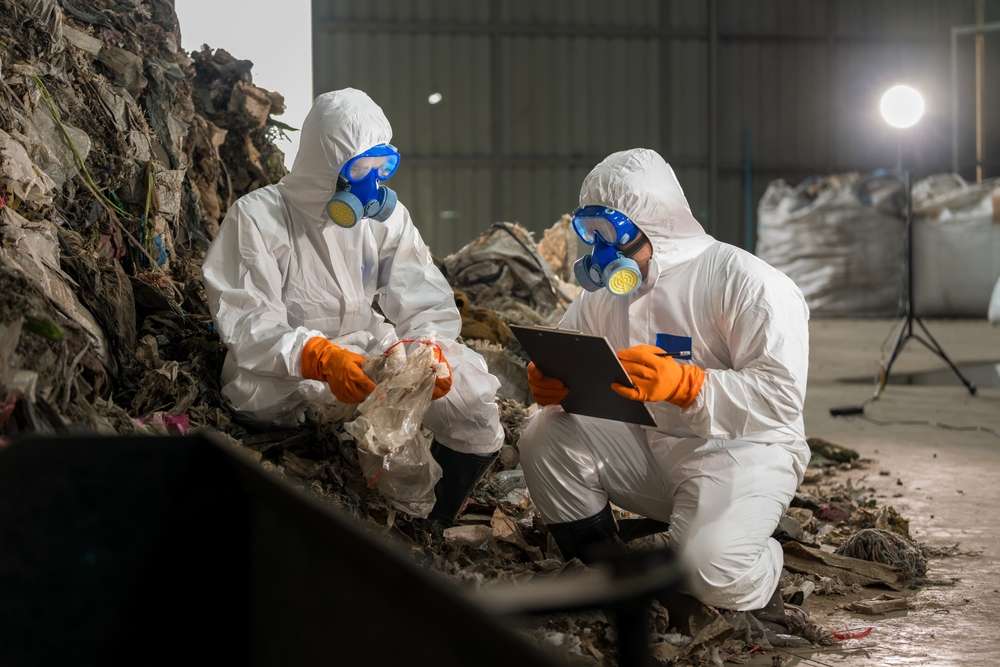
In a commercial environment, the pressure to minimise downtime is significant. This often produces a surface approach, where the visible matter is removed and the area is reopened without further assessment. The problem is that biological fluids do not behave like standard spills.
In a modern office or retail unit, fluids migrate. Blood can travel under partitions, seep through the seams of laminate flooring, or settle in the porous tracks of sliding doors. If these areas are not identified and treated, the material will decompose over time, creating hazardous odours and structural deterioration. A week after a non-specialist clean, a lingering odour is not an inconvenience. It is confirmation that biological matter is still present.
Specialist cleaning uses technology such as ozone or hydroxyl generators to neutralise odour molecules at the source rather than masking them with fragrance. This distinction is the difference between a space that looks clean and one that is verified as safe.
What this costs businesses
Sites that are not properly decontaminated frequently require repeated closures. Each closure has operational and reputational costs that far exceed the original investment in professional remediation.
3. Failure to comply with hazardous waste legislation
When a business generates waste contaminated with blood or other bodily fluids, it is legally classified as hazardous or clinical waste. It cannot be disposed of in a standard commercial skip or general waste bin.
Businesses are also required to maintain a chain of custody, proving that hazardous materials were transported and disposed of by a licensed waste carrier. If the Environment Agency identifies biohazard waste from a business in a standard landfill, the financial penalties can be substantial and prosecution is possible.
Our trauma cleaning teams are licensed carriers who provide a full audit trail, including waste transfer notes and certificates of decontamination. Clients receive documentation that confirms every stage of the disposal process was carried out to the required standard. Our accreditations reflect the rigorous compliance requirements associated with this work.
The paperwork is not optional
Many businesses discover this only after an incident. Having a pre-agreed process with a specialist contractor means the chain of custody is handled automatically, with no gaps in the documentation that could create liability later.
4. Prioritising disinfecting over decontamination
There is a significant difference between sanitising a surface and decontaminating a trauma scene. Many businesses reach for industrial cleaning products, assuming that strength equates to safety.
Common disinfectants are often deactivated by organic matter. If blood is present, the chemical may address surface bacteria but fail to penetrate the biological load, leaving viruses such as HIV or Hepatitis infectious beneath a layer of coagulated protein. Professional trauma cleaners use broad-spectrum biocides formulated specifically for blood-borne pathogens. They also use ATP testing, a verification method used in clinical environments, to confirm that a surface is biologically sterile before it is released for re-entry.
The verification step matters
Signing off a space as clean without biological verification creates risk for everyone who subsequently uses it. The ATP testing step provides the documented evidence that the space is genuinely safe, not merely presentable.
5. Neglecting a disaster recovery plan for trauma
Many businesses maintain fire drills and data backup protocols, yet have no documented procedure for trauma scene response. When an incident occurs without a plan in place, management must make high-pressure decisions under duress, often at the cost of time.
Every hour that a biohazard remains on site, the risk of cross-contamination increases. Foot traffic can spread pathogens to other areas of the building, and fluids continue to migrate deeper into surfaces. Without a pre-agreed specialist partner, that time is spent locating a contractor rather than beginning the response.
A robust business continuity strategy should include a first-response protocol for trauma incidents. This typically covers four steps:
- Cordon the area immediately to restrict access.
- Isolate HVAC systems if airborne contamination is suspected.
- Contact your specialist remediation partner.
- Document the perimeter of the incident for insurance and health and safety records.
If you want to discuss a priority service agreement that removes the uncertainty from this process, contact us to talk through your requirements.
The commercial impact of poor scene management
The consequences of these mistakes extend beyond the biological. They carry financial and reputational weight.
| Risk area | Consequence of poor handling | Professional outcome |
|---|---|---|
| Legal | HSE fines, COSHH violations | Full regulatory compliance |
| Reputational | Loss of client and staff trust | Discreet, unmarked response |
| Financial | Insurance claim rejection, structural damage | Documented, certified remediation |
| Operational | Repeated closures due to returning odour | Thorough, verified restoration |
A business’s handling of a traumatic event is observed by staff, clients, and in some cases the wider public. A response that is discreet, thorough, and clearly professional communicates that the organisation takes its responsibilities seriously. A response that cuts corners — even if nobody notices immediately — often surfaces later in ways that are harder to manage.
Summary: what responsible businesses do
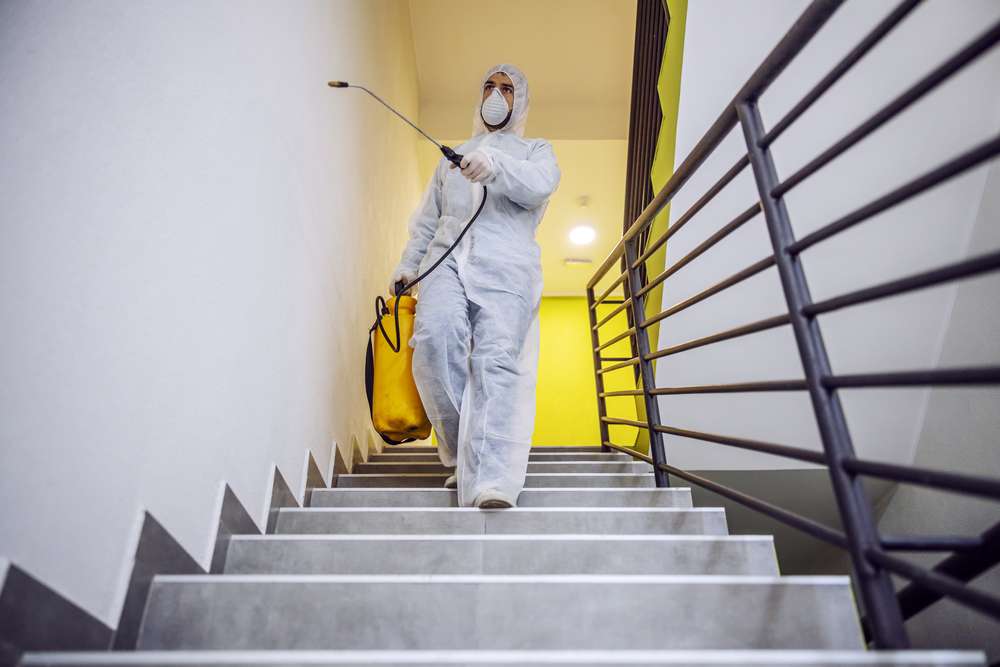
To avoid these pitfalls, the core principles are straightforward:
- Never use domestic cleaning tools on biohazard scenes.
- Always verify the Waste Carrier Licence of any contractor engaged.
- Never assign cleaning duties to staff that fall outside their training.
- Always request a Certificate of Decontamination for compliance records.
- Never assume that a space is safe because it looks clean.
Conclusion
Handling a trauma scene is one of the most demanding situations a business leader or facilities manager will face. It requires technical precision, an understanding of regulatory obligations, and a considered response to the people affected.
Scheduling professional cleaning services through a specialist contractor removes the uncertainty from that process. At Sentrex, we help UK businesses manage these situations with the rigour and discretion they require. We restore the safety and integrity of your environment so that operations can resume with confidence and full compliance.
Learn more about our trauma and specialist cleaning services or get in touch to discuss your requirements.


