
When trauma cleaning is mentioned, most people immediately envision high-profile crime scenes or the tragic discovery of an unattended death. While these are indeed core aspects of the industry, the scope of trauma cleaning services is much wider. In reality, these specialist skills are required in a variety of everyday environments, places where the average person would never expect to encounter a biohazard.
Whenever an environment is compromised by biological, chemical, or hazardous materials that pose a risk to human health, it needs a professional solution. Whether it is a commercial office, a public transport vehicle, or a rented holiday cottage, the goal of trauma cleaning is to restore safety, hygiene, and dignity to a space and all involved.
Below, we at Sentrex will explore ten unexpected locations where professional trauma cleaning is not just beneficial, but essential.
1. Public transport and private hire vehicles
We often think of buses, trains, and taxis as simple conduits for travel, but they are also high-footfall areas where medical emergencies or violent incidents can occur.
The challenge of confined spaces
If a passenger suffers a severe medical episode or a physical altercation takes place, bodily fluids can quickly permeate seat fabrics, flooring, and even the heating and ventilation systems. Standard valeting services are not equipped with the industrial-grade biocides or the PPE required for biohazard clean-up.
Rapid decontamination for fleet management
For transport providers, downtime is a significant financial burden. However, the risk of smearing a biohazard into the fabric during a DIY clean is far greater. Professional trauma cleaners ensure that the vehicle is returned to service safely, protecting both the driver and future passengers from blood-borne pathogens.
2. Short-term holiday rentals and Airbnb
The booming staycation market in the UK has led to an increase in people renting out their properties. While most guests are respectful, landlords occasionally face scenes of extreme neglect or accidental injury.
Beyond a standard changeover
Regular domestic cleaners are trained to change linens and polish surfaces; they are not trained to handle drug paraphernalia or significant biological spills. If a property has seen a serious accident or drug use, the risk of infectious disease exposure, and potential drug contamination is high.
Using a professional service ensures the property remains safe for the next guest and protects the landlord’s reputation. To learn more about our background in these sensitive cases, you can read about us and who Sentrex are.
3. Workplace industrial accidents
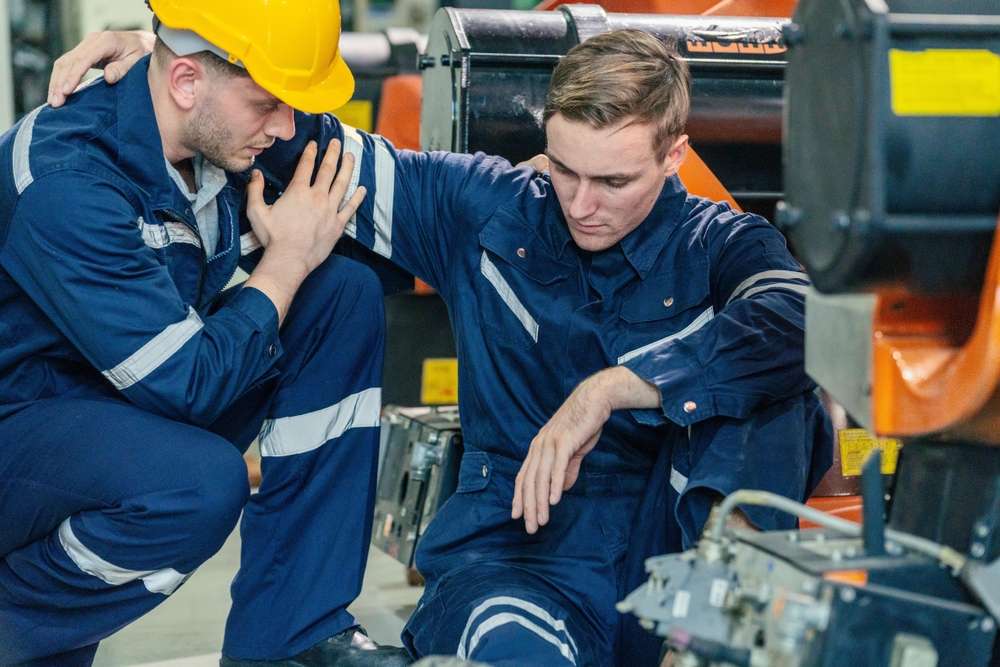
Factories and construction sites are high-risk environments where machinery-related injuries can occur. While the focus is rightly on the medical care of the injured party, the physical site must be remediated before work can resume.
Regulatory compliance and staff welfare
Asking an employee to clean up after a colleague’s accident is not only a breach of health and safety regulations but is also deeply insensitive. It can lead to long-term psychological distress and a breakdown in workplace morale. Specialist trauma cleaning services handle the technical removal of biological matter, ensuring the business remains compliant with the Health and Safety at Work etc. Act 1974.
4. Changing rooms and toilets
High-street shops and shopping centres are frequent sites for hidden trauma. Security teams and facilities managers often encounter biohazards in changing rooms or public washrooms that go far beyond standard janitorial duties.
- Vulnerable individuals: Public toilets are sometimes used by those in crisis, leading to incidents involving self-harm or overdose.
- Contamination risk: In these scenarios, the risk of Hepatitis or HIV from used needles (sharps) or blood spills is a major concern.
Professional forensic cleaning techniques are used to sweep these areas, ensuring all hazardous waste is removed, and the area is fully sanitised for public use.
5. Construction Sites and “Brownfield” Developments
Before a single brick is laid on a new development, the site often requires a “sweep.” This is particularly true for abandoned buildings or land that has been unoccupied for a long period.
Squatting and drug use residue
Abandoned buildings are frequently used by rough sleepers or for illicit activities. Before construction crews can enter, trauma cleaning services are needed to clear the site of human waste, rotting organic matter, and discarded needles. This is often an overlooked part of hazardous waste removal that is vital for the safety of the build team. You can view our accreditations to see the standards we uphold for site safety.
6. Hotel rooms following “silent” incidents
Hotels are places of transience, and occasionally, guests pass away from natural causes during their stay. While this is not a crime, it still qualifies as an unattended death cleaning scenario if the individual is not found immediately.
Discretion and brand protection
Hotels rely heavily on their reputation. The discovery of a death in a room requires discreet cleaning services that can operate without distressing other guests. Specialists use unmarked vehicles and operate during quiet hours to ensure the room is decontaminated and deodorised without causing a panic or a PR crisis.
7. Police custody suites and prison cells
The justice system frequently requires the expertise of crime scene cleaning specialists for the maintenance of holding cells.
Self-harm and “dirty protests”
In custody environments, staff often deal with “dirty protests” (the intentional spreading of human waste) or incidents of self-harm. These scenarios represent a massive biohazard risk.
Specialist teams use high-pressure steam and industrial disinfectants to restore these cells to a hygienic state, protecting the health of both the detainees and the officers. This falls under our broader specialist cleaning umbrella.
8. Schools and early-years settings
It is a distressing thought, but schools can be the site of serious accidents or even incidents of violence. Because children are involved, the standard for decontamination is exceptionally high.
The need for total eradication
In a school, mostly clean is not good enough. Children frequently touch surfaces and put their hands in their mouths. Professional trauma cleaning services use ATP testing to verify that surfaces are biologically sterile. This provides peace of mind to parents, teachers, and governors that the environment is 100% safe for the return of pupils.
9. Care homes and Assisted living facilities
While care homes deal with medical issues daily, they are not always equipped to handle major biohazard events, such as a large-scale norovirus outbreak or a traumatic fall resulting in significant blood loss.
Supporting the staff
Care staff are experts in looking after people, but they are not biohazard remediation specialists. Bringing in an external team for decontamination services allows the regular staff to focus on the emotional needs of the residents while the professionals handle the hazardous elements of the clean-up.
10. Hoarding and neglected properties
Many people don’t associate hoarding clean-up with trauma cleaning, but the two are intrinsically linked. In extreme cases, a hoarded house may contain extensive filth, animal carcasses, or human waste.
Hidden dangers
Beneath the piles of clutter, there is often a physical trauma to the building itself. Mould, pest infestations, and structural rot are common. Clearing these properties requires more than just a skip; it requires a compassionate, trauma-informed approach to help the resident while safely removing biohazards. To find out how to begin this process, you can contact us for a confidential consultation.
Why professional intervention is non-negotiable
The common thread in all these locations is the level of risk. Attempting a DIY clean in any of these scenarios can lead to:
- Secondary infection: Exposure to pathogens like MRSA, C. Diff, or blood-borne viruses.
- Legal liability: Failing to follow UK environmental laws regarding the disposal of hazardous waste.
- Permanent damage: Using the wrong chemicals can trap odours or ruin expensive structural materials.
Professional trauma cleaning services offer a “Log 6” reduction in pathogens meaning they kill 99.9999% of bacteria, a standard that domestic cleaning products simply cannot meet.
The Importance of Professional Empathy
At Sentrex, we understand that behind every site is a human story. Whether we are cleaning a retail changing room or a private home, we lead with compassion.
Our technicians are trained not just in the science of biohazard clean-up, but in the art of professional empathy. We work quickly and quietly to restore order to your life or business, allowing the emotional healing to begin.


